
Accent
Smooth Agave
Agave desmettiana · Asparagaceae (Agavoideae; formerly Agavaceae)
Also called: Smooth-Edge Agave, Dwarf Century Plant, Variegated Smooth Agave
Smooth Agave (Agave desmettiana) is a low-water accent well suited to Tucson and the low desert. It thrives in full sun to part shade, with a moderate to fast growth rate. Expect yellow (chartreuse-yellow) blooms spring to early summer.
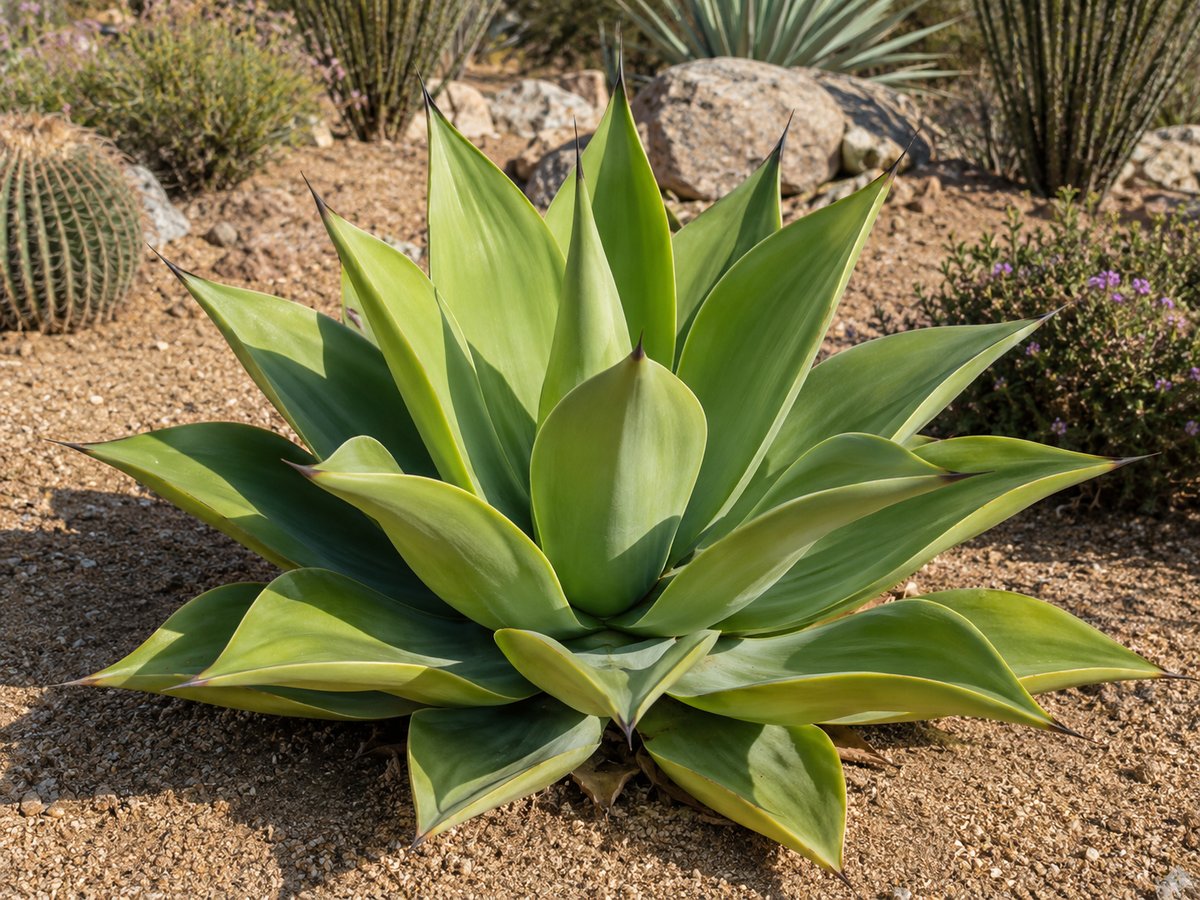
Smooth Agave at a glance
- Water use
- Low (established)
- Sun
- Full sun to part shade; appreciates afternoon/filtered shade in the low desert to prevent leaf scorch and leaf-tip burn.
- Mature size
- 2-3 ft H x 3-4 ft W (rosette); flower stalk to 8-10 ft
- Growth rate
- Moderate to fast
- Bloom
- Yellow (chartreuse-yellow), Spring to early summer; monocarpic (rosette dies after flowering) but produces abundant bulbils and offsets to replace it.
- Cold hardiness
- Hardy to about 25-28 F; USDA zones 9-11. Cold-tender for Tucson - benefits from a protected microclimate and may show frost damage in hard freezes.
- Soil
- Well-drained soil; tolerates a range of soils including sandy and rocky native soils. Needs good drainage to avoid root/crown rot.
- Native range
- Mexico (cultivated origin; thought to derive from the Yucatan/Gulf region of Mexico). Not native to Arizona.
- Best used as
- Accent / focal point, Container plant, Poolside (no sharp marginal teeth), Mass plantings, Mediterranean and contemporary desert designs
- Wildlife
- Flowers attract bees, hummingbirds, and other pollinators; provides nectar.
- Toxicity
- Sap contains calcium oxalate and saponins that can irritate skin and eyes (contact dermatitis); ingestion is irritating to people and pets. Sharp terminal spine can cause puncture injury.
How to grow Smooth Agave in Tucson & the low desert
Watering
Drought tolerant once established; in Tucson water every 2-4 weeks in summer for best appearance and faster growth, monthly or less in cooler months, and none in winter. Avoid overwatering, which causes rot.
Fertilizer & nutrients
Generally not needed in landscape soils. A light application of dilute balanced or low-nitrogen fertilizer once in spring can speed growth on younger plants, but excess nitrogen produces soft, frost-tender growth.
Pruning & care
Remove dead, frost-damaged, or spent lower leaves and the spent flower stalk after bloom. Remove offsets/bulbils to control spread. Wear gloves; sap can irritate skin.
Notes
Smooth, soft, gracefully arching gray-green to glossy-green leaves with smooth (toothless) margins and a small terminal spine, making it safer near walkways and pools than toothed agaves. A popular variegated cultivar ('Variegata') has yellow leaf margins. One of the more cold-tender ornamental agaves used in Tucson - site it where it is protected from hard frost.
Sources: AMWUA 'Landscape Plants for the Arizona Desert'; University of Arizona Cooperative Extension; Arizona-Sonora Desert Museum; Tohono Chul / Tucson Botanical Gardens plant references