
Accent
Blue Elf Aloe
Aloe 'Blue Elf' · Asphodelaceae (formerly Liliaceae/Aloeaceae)
Also called: Blue Elf Aloe, Aloe x 'Blue Elf'
Blue Elf Aloe (Aloe 'Blue Elf') is a low-water accent well suited to Tucson and the low desert. It thrives in full sun to partial shade. Expect orange to orange-red blooms Primarily late winter to spring.
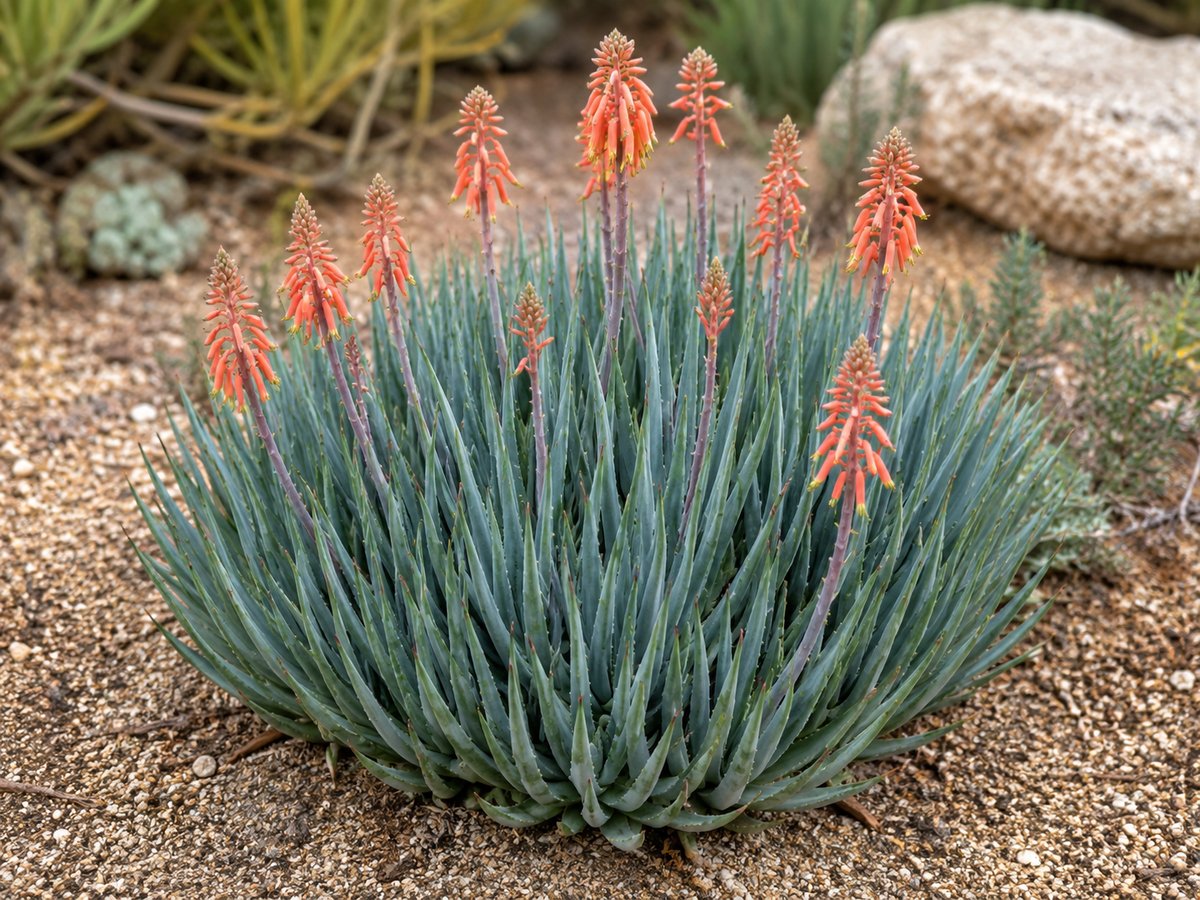
Blue Elf Aloe at a glance
- Water use
- Low (established)
- Sun
- Full sun to partial shade; tolerates reflected heat well. Bluest leaf color and best flowering occur in full sun, but it accepts light shade.
- Mature size
- 12-18 in H x 18-24 in W (clumping rosettes); flower stalks to about 2 ft
- Growth rate
- Moderate to fast (forms dense clumps relatively quickly)
- Bloom
- Orange to orange-red, Primarily late winter to spring (roughly January-April), often with sporadic rebloom; long-lasting tubular flowers on slender stalks
- Cold hardiness
- Hardy to about 20-25°F; USDA zones 9-11. One of the more cold- and heat-tolerant landscape aloes, performing reliably in the Tucson low desert.
- Soil
- Well-drained sandy, gritty, or decomposed-granite soil. Tolerant of poor desert soils as long as drainage is good.
- Native range
- A horticultural hybrid (cultivar) of African Aloe parentage; not a wild species and not native to the Sonoran Desert.
- Best used as
- Accent and mass planting, Low borders and edging, Groundcover-style succulent drifts, Containers and rock gardens, Hummingbird/pollinator gardens, Median and commercial low-water plantings
- Wildlife
- Reliable cool-season nectar source — flowers strongly attract hummingbirds and bees. Deer- and rabbit-resistant.
- Toxicity
- Like other aloes, the leaf sap/latex is irritating and toxic if ingested; considered mildly toxic to pets (vomiting/diarrhea). Not for consumption.
How to grow Blue Elf Aloe in Tucson & the low desert
Watering
Drought tolerant once established. Water every 1-2 weeks in summer for best appearance, monthly or less in winter. Tolerates more neglect than Aloe vera but looks best with occasional deep irrigation.
Fertilizer & nutrients
Low needs. An optional light application of balanced fertilizer in spring encourages flowering; generally thrives without feeding.
Pruning & care
Remove spent flower stalks and any dried or frost-nipped leaves. Divide crowded clumps and remove offsets every few years to keep plantings vigorous.
Notes
A tough, popular landscape hybrid forming tidy clumps of slender, slightly toothed blue-gray leaves. Valued for its dense growth, heat and cold tolerance, and bright orange winter-to-spring flowers. One of the most dependable mass-planting and accent aloes for Tucson commercial and residential xeriscapes; very low maintenance.
Sources: Arizona-Sonora Desert Museum; AMWUA / low-desert plant references; University of Arizona Cooperative Extension; Mountain States Wholesale Nursery (regional grower references)