
Vine · Sonoran native
Yellow Orchid Vine
Callaeum macropterum · Malpighiaceae
Also called: Yellow Butterfly Vine, Gallinita, Mascagnia macroptera (synonym)
Yellow Orchid Vine (Callaeum macropterum) is a low-water vine native to the Sonoran Desert region well suited to Tucson and the low desert. It thrives in full sun, with a moderate to fast growth rate.
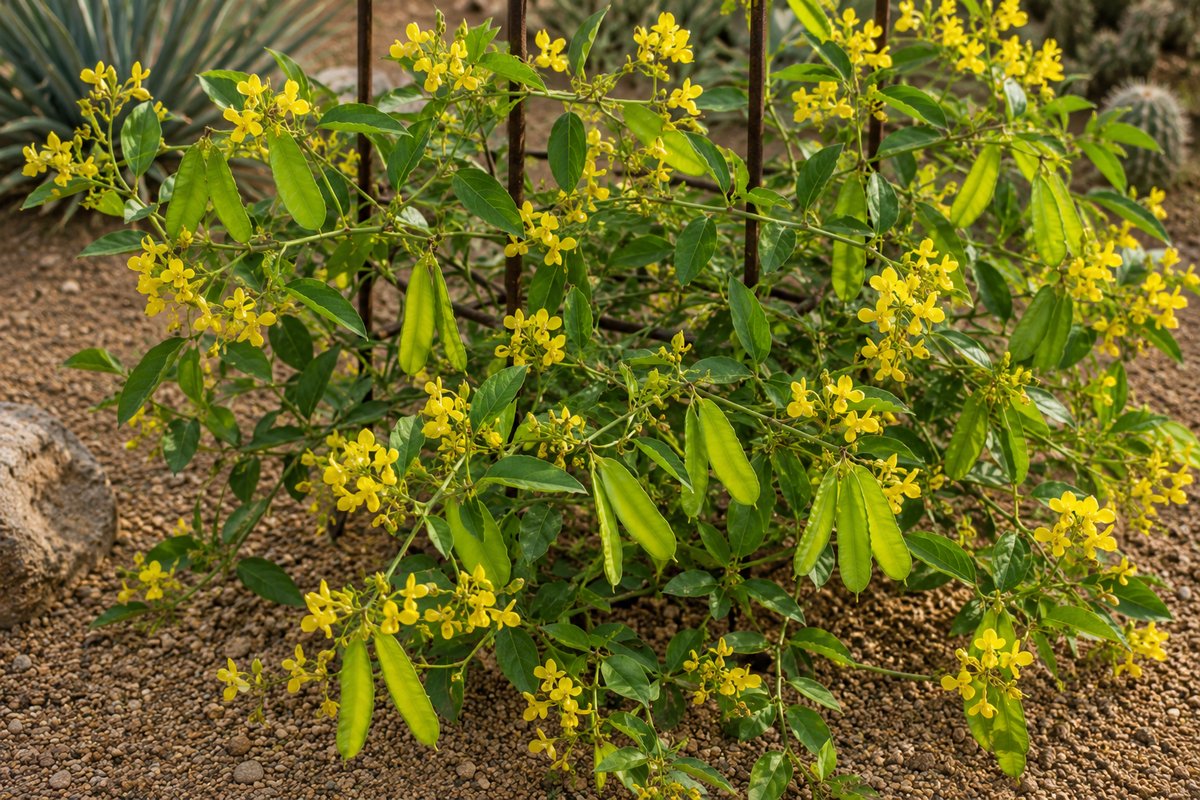
Yellow Orchid Vine at a glance
- Water use
- Low (established)
- Sun
- Full sun; tolerates reflected heat and partial shade.
- Mature size
- 15-20 ft H x 10-15 ft W (twining; climbs with support or mounds as a shrub without it)
- Growth rate
- Moderate to fast
- Bloom
- Bright yellow flowers, followed by distinctive chartreuse-to-tan papery winged seedpods shaped like butterflies, Spring through fall, most prolific after warm-season rains; sporadic bloom whenever conditions are warm
- Cold hardiness
- Hardy to about 20-25 F (USDA zones 9-11); foliage may be damaged by hard frost but recovers quickly.
- Soil
- Well-drained native desert soils; tolerant of alkaline, rocky, infertile soils. Excellent drainage preferred.
- Native range
- Sonoran Desert of Mexico (Sonora, Baja California, Sinaloa); naturally occurs in the broader Sonoran Desert region.
- Best used as
- Trellis, arbor, and fence cover, Screening, Informal shrub/mounding accent, Low-water vertical color
- Wildlife
- Flowers attract bees and butterflies; the ornamental winged seedpods add visual and habitat interest.
- Toxicity
- No significant toxicity reported.
How to grow Yellow Orchid Vine in Tucson & the low desert
Watering
Low water once established; deep, infrequent irrigation in summer keeps it looking lush and blooming, but it tolerates considerable drought. Minimal winter water.
Fertilizer & nutrients
Minimal needs; a light application of general fertilizer in spring is adequate. Generally thrives without supplemental feeding in reasonable soil.
Pruning & care
Prune in late winter or early spring to shape, control size, and remove frost-nipped or dead growth; can be sheared as a shrubby mass or trained to a trellis.
Notes
Botanical name updated: long sold as Mascagnia macroptera, now accepted as Callaeum macropterum. Prized for the showy butterfly-shaped winged fruits that follow the yellow flowers. A tough, well-adapted choice for low-desert, low-water landscapes that twines if given support or forms a mound if not.
Sources: AMWUA Landscape Plants for the Arizona Desert; Arizona-Sonora Desert Museum; University of Arizona Cooperative Extension; Tohono Chul