
Citrus
Moro Blood Orange
Citrus x sinensis 'Moro' · Rutaceae
Also called: Blood Orange, Moro Orange
Moro Blood Orange (Citrus x sinensis 'Moro') is a moderate-water citrus well suited to Tucson and the low desert. It thrives in full sun, with a moderate growth rate. Expect white blooms spring bloom.
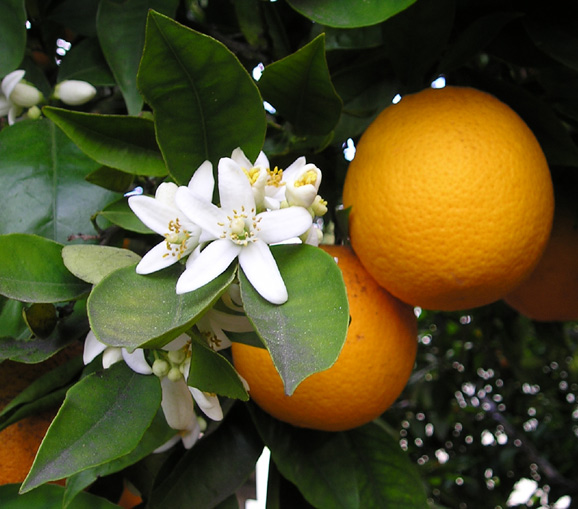
Moro Blood Orange at a glance
- Water use
- Moderate (established)
- Sun
- Full sun (6+ hours). Cool nights intensify the red flesh color, so a spot with good winter chill (but still frost-drained) is ideal; shield bark from west-afternoon sun.
- Mature size
- Slightly smaller than navel/Valencia; about 12-18 ft tall and wide on standard rootstock, less on dwarf stock.
- Growth rate
- Moderate
- Bloom
- White, Spring bloom (March-April); fruit ripens mid-winter, roughly January into March/April. Red blush develops with Tucson's cool winter nights.
- Cold hardiness
- USDA 9a-9b. Cold-tender sweet orange (injury below ~26-28 F). The winter harvest is exposed to frost, so plant in a warm microclimate with cold-air drainage and be ready to protect ripening fruit and young trees during freezes.
- Soil
- Well-drained desert soil, alkaline-tolerant; avoid standing water and caliche. Mound-plant in heavy ground.
- Native range
- Cultivar of sweet orange (C. x sinensis); the Moro blood orange originated in Sicily, Italy.
- Best used as
- Fresh eating, Specialty juicing (red juice), Edible / ornamental landscape, Pollinator forage
- Wildlife
- Bees use the spring bloom; birds and wildlife take dropped fruit.
- Toxicity
- Fruit edible and safe for people. Leaves, peel oils, and seeds can be toxic to dogs, cats, and horses in quantity.
How to grow Moro Blood Orange in Tucson & the low desert
Watering
Deep, infrequent irrigation to ~3 ft: every 7-10 days in summer, every 2-3 weeks spring/fall, every 4-6 weeks winter. Water at the dripline and allow the surface to dry between cycles.
Fertilizer & nutrients
About 1-1.5 lb actual N per year for a mature tree in three feedings (Jan-Feb, Mar-Apr, May-Jun); avoid fall nitrogen. Correct alkaline-soil micronutrient (iron/zinc/manganese) chlorosis with chelated products.
Pruning & care
Light: deadwood, suckers, and crossing branches only; shape after harvest in late winter/early spring. Keep canopy dense to shade bark and reduce sunburn.
Notes
Deepest-colored common blood orange with berry/raspberry notes; the red anthocyanin pigment is strongest when nights are cold, which Tucson winters provide. Self-fruitful. Plant fall to early spring. Color and flavor vary year to year with how cold the winter runs.
Sources: University of Arizona Cooperative Extension az1850 'Oranges for Southern Arizona' (G. Wright); University of Arizona Cooperative Extension az1001 'Low Desert Citrus Varieties'; University of Arizona Cooperative Extension 'Citrus Fertilization Chart for Arizona'; Arizona-Sonora Desert Museum / AMWUA desert plant guidance