
Palm
Sago Palm
Cycas revoluta · Cycadaceae
Also called: King sago, Japanese sago palm, Sago cycad
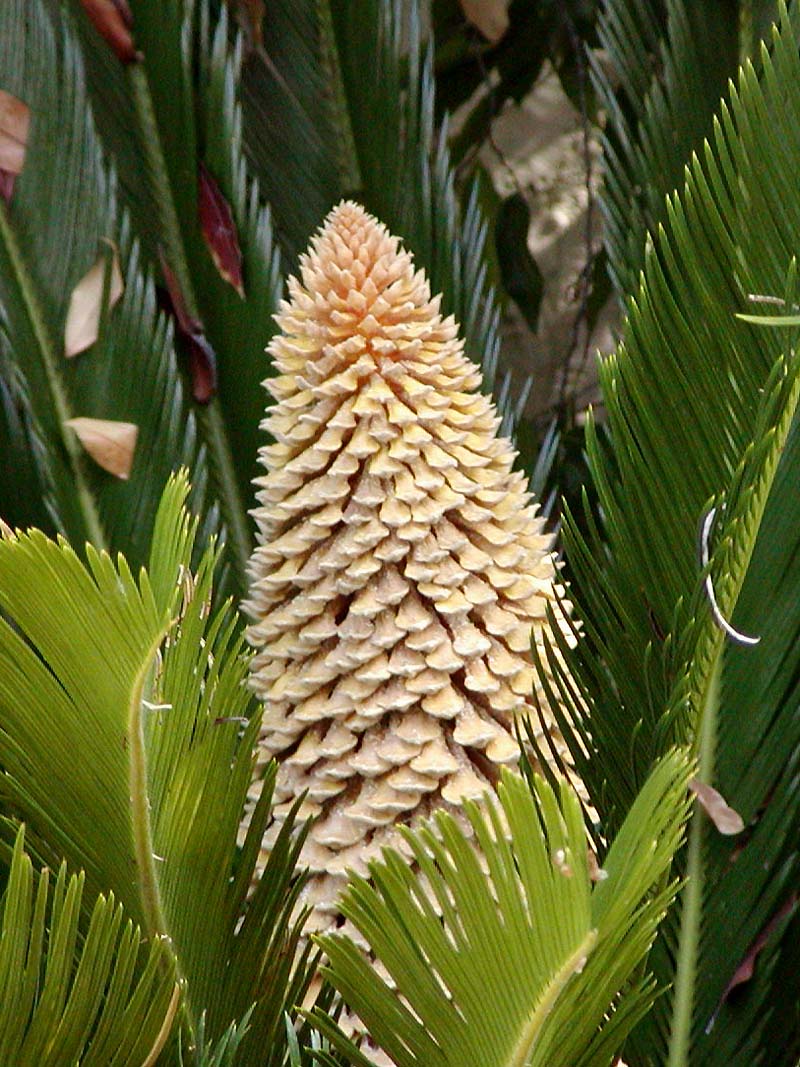
Sago Palm (Cycas revoluta) is a low-water palm well suited to Tucson and the low desert. It's a slow-growing palm. Expect golden yellow (cone) blooms Not a true flower.
Sago Palm at a glance
- Water use
- Low (established)
- Sun
- Filtered sun to partial shade in Tucson; provide afternoon/western shade. Full low-desert sun bleaches and burns the fronds, especially the soft new flush.
- Mature size
- 3-6 ft tall and wide over many years (very slow); occasionally taller with age
- Growth rate
- Slow
- Bloom
- Golden yellow (cone), Not a true flower; produces a cone. Males form an elongated golden cone, females a fuzzy dome, typically late spring/summer.
- Cold hardiness
- Hardy to about 15-20F; foliage damaged by hard Tucson frost but the caudex usually resprouts. Protect or site in a warm microclimate.
- Soil
- Requires well-drained sandy or gritty soil; rots in heavy, poorly drained or overwatered soil.
- Native range
- Southern Japan (Kyushu, Ryukyu Islands)
- Best used as
- Accent/specimen plant, Container and patio plantings, Tropical and Asian-themed landscapes
- Wildlife
- Limited wildlife value; not a nectar or food plant for desert wildlife.
- Toxicity
- HIGHLY TOXIC to pets (especially dogs) and people. All parts, particularly the seeds, contain cycasin and can cause severe liver failure and death if ingested. Keep away from children and pets.
How to grow Sago Palm in Tucson & the low desert
Watering
Drought-tolerant once established; water deeply every 1-2 weeks in summer and monthly in winter. Allow soil to dry between waterings and ensure excellent drainage to prevent crown and root rot.
Fertilizer & nutrients
Light feeder; apply a palm or cycad fertilizer with micronutrients 1-2 times in spring/summer. Prone to manganese and magnesium deficiency (yellow/frizzled new leaves) in alkaline desert soil.
Pruning & care
Remove only old, fully yellow/brown fronds and spent leaf bases; retain healthy green fronds. New flushes emerge in a single ring and are soft and easily damaged, so avoid disturbing them.
Notes
Botanically a cycad, NOT a true palm, but universally sold and used as one. Excellent for shaded Tucson courtyards and containers. The single most important caution is its severe toxicity, especially the seeds, which are frequently fatal to dogs. Needs sharp drainage and protection from full afternoon sun and hard frost.
Sources: University of Arizona Cooperative Extension; ASPCA Toxic Plants; Arizona-Sonora Desert Museum