Cactus · Sonoran native
Pencil Cholla
Cylindropuntia arbuscula · Cactaceae
Also called: Arizona Pencil Cholla, Shrubby Cholla
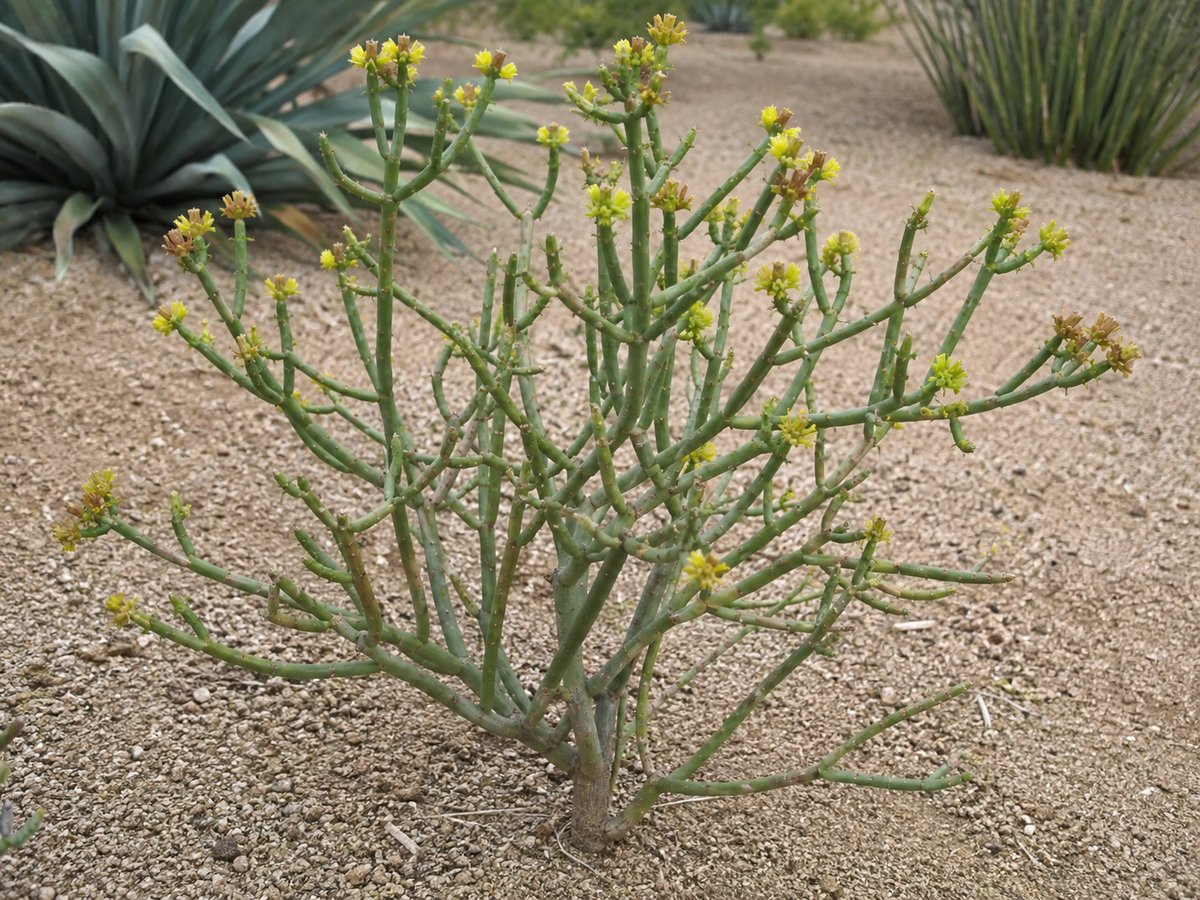
Pencil Cholla (Cylindropuntia arbuscula) is a very low-water cactus native to the Sonoran Desert region well suited to Tucson and the low desert. It thrives in full sun, with a slow to moderate growth rate.
Pencil Cholla at a glance
- Water use
- Very Low (established)
- Sun
- Full sun; thrives in the most exposed, hot, reflected-heat sites.
- Mature size
- 3-6 ft H x 3-6 ft W; tree-like shrubby habit with a short trunk and slender, pencil-thick (about 1/4-1/2 in diameter) green cylindrical joints.
- Growth rate
- Slow to moderate
- Bloom
- Yellow to greenish-yellow or bronze, sometimes tinged orange or reddish, Late spring to early summer (April-June), followed by fleshy yellow-green spineless fruit
- Cold hardiness
- Hardy to about 15-20 F; USDA zones 8b-11. Fully cold-hardy throughout the Tucson low desert.
- Soil
- Well-drained sandy, gravelly, or rocky desert soils; tolerates poor native caliche soils. Avoid soggy ground.
- Native range
- Sonoran Desert of south-central and southern Arizona and Sonora, Mexico; common in the Tucson basin and surrounding desert flats.
- Best used as
- Wildlife/habitat gardens, Natural desert landscapes, Barrier or security planting, Revegetation and erosion control
- Wildlife
- Provides nesting sites and cover for cactus wren, thrashers, and other birds; flowers attract native bees; fruit eaten by birds, rodents, javelina, and other wildlife.
- Toxicity
- Not chemically toxic, but spines and detachable barbed joints/glochids cause painful mechanical injury to people and pets. Site away from walkways.
How to grow Pencil Cholla in Tucson & the low desert
Watering
Extremely drought tolerant once established; no supplemental water needed beyond natural rainfall in Tucson. Occasional deep soak (monthly) in the hottest part of summer can improve appearance but is optional.
Fertilizer & nutrients
None required; adapted to lean desert soils. Fertilizer is unnecessary and can cause weak, overly succulent growth.
Pruning & care
Minimal. Remove dead or wayward joints with tongs and clean cuts to shape or control spread. Wear heavy gloves and use barbecue tongs because barbed glochids and spined joints detach easily.
Notes
A common, easily overlooked native cholla with slender stems that distinguish it from the showier teddybear and staghorn chollas. Detached joints root readily, so cleanup of dropped segments is important. Excellent low-maintenance habitat plant for naturalistic Tucson designs.
Sources: University of Arizona Cooperative Extension; Arizona-Sonora Desert Museum; SEINet / Arizona Flora; Tohono Chul / Tucson Botanical Gardens