
Cactus · Sonoran native
Staghorn Cholla
Cylindropuntia versicolor · Cactaceae
Also called: Pencil Cholla
Staghorn Cholla (Cylindropuntia versicolor) is a very low-water cactus native to the Sonoran Desert region well suited to Tucson and the low desert. It grows to 3-9 ft H x 3-6 ft W in full sun, with a slow to moderate growth rate.
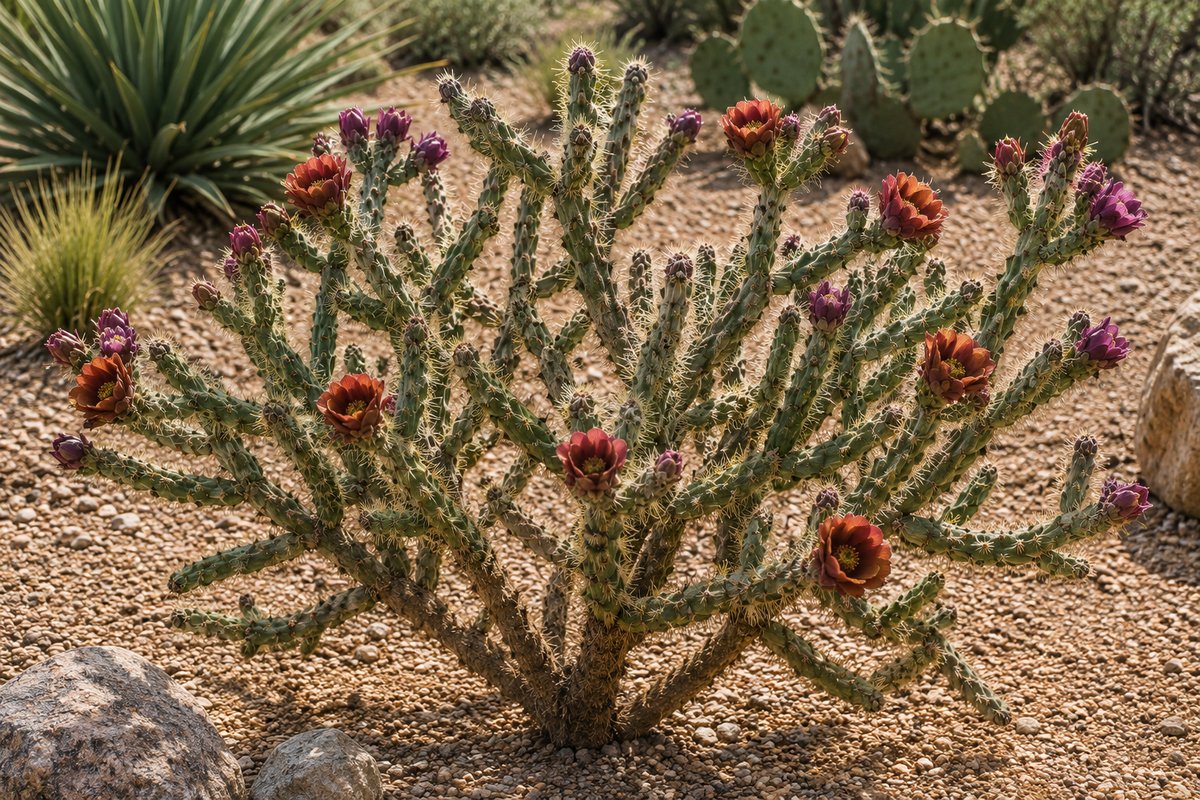
Staghorn Cholla at a glance
- Water use
- Very Low (established)
- Sun
- Full sun
- Mature size
- 3-9 ft H x 3-6 ft W
- Growth rate
- Slow to moderate
- Bloom
- Highly variable (versicolor = 'various colors'): bronze, copper, red, orange, yellow, magenta, or greenish, Spring to early summer (April-May)
- Cold hardiness
- Hardy to about 15-20 F; USDA zones 8b-11
- Soil
- Well-drained native desert soil; tolerant of rocky, gravelly, decomposed-granite soils; intolerant of poor drainage
- Native range
- Sonoran Desert of southern Arizona (esp. around Tucson) and northern Sonora, Mexico
- Best used as
- Accent/specimen, Wildlife habitat, Barrier/security planting, Native and revegetation landscapes
- Wildlife
- Flowers attract native bees and other pollinators; cactus wrens and thrashers nest in the branches; woodrats and other wildlife use it for cover; fruit eaten by birds and mammals.
- Toxicity
- Not toxic, but spines and barbed glochids cause painful mechanical injury to people and pets.
How to grow Staghorn Cholla in Tucson & the low desert
Watering
Once established, needs no supplemental irrigation; if watering young plants, deep-soak only every 3-4 weeks in summer and stop entirely in winter to prevent rot.
Fertilizer & nutrients
Not needed; native desert soils provide adequate nutrients. Avoid fertilizing, which forces weak, rot-prone growth.
Pruning & care
Generally none required; remove dead, damaged, or crowding joints with long-handled tongs, cutting at a segment joint. Wear heavy gloves due to barbed glochids and spines.
Notes
Distinguished by its purplish, slender, segmented branches and remarkably variable flower color (the species name versicolor). Fruits are usually fleshy and proliferate, sometimes forming short chains. Plant away from walkways, pools, and play areas because of the barbed spines.
Sources: Arizona-Sonora Desert Museum (Sonoran Desert plant database); University of Arizona Cooperative Extension; Tohono Chul Park plant guides; SEINet / Arizona flora references