
Groundcover
Trailing Smokebush
Dalea capitata 'Sierra Gold' · Fabaceae
Also called: Trailing Dalea, Sierra Gold Dalea, Lemon Dalea
Trailing Smokebush (Dalea capitata 'Sierra Gold') is a low-water groundcover well suited to Tucson and the low desert. It grows to 12-18 in H x 3-4 ft W in full sun, with a moderate to fast growth rate. Expect yellow blooms spring and fall.
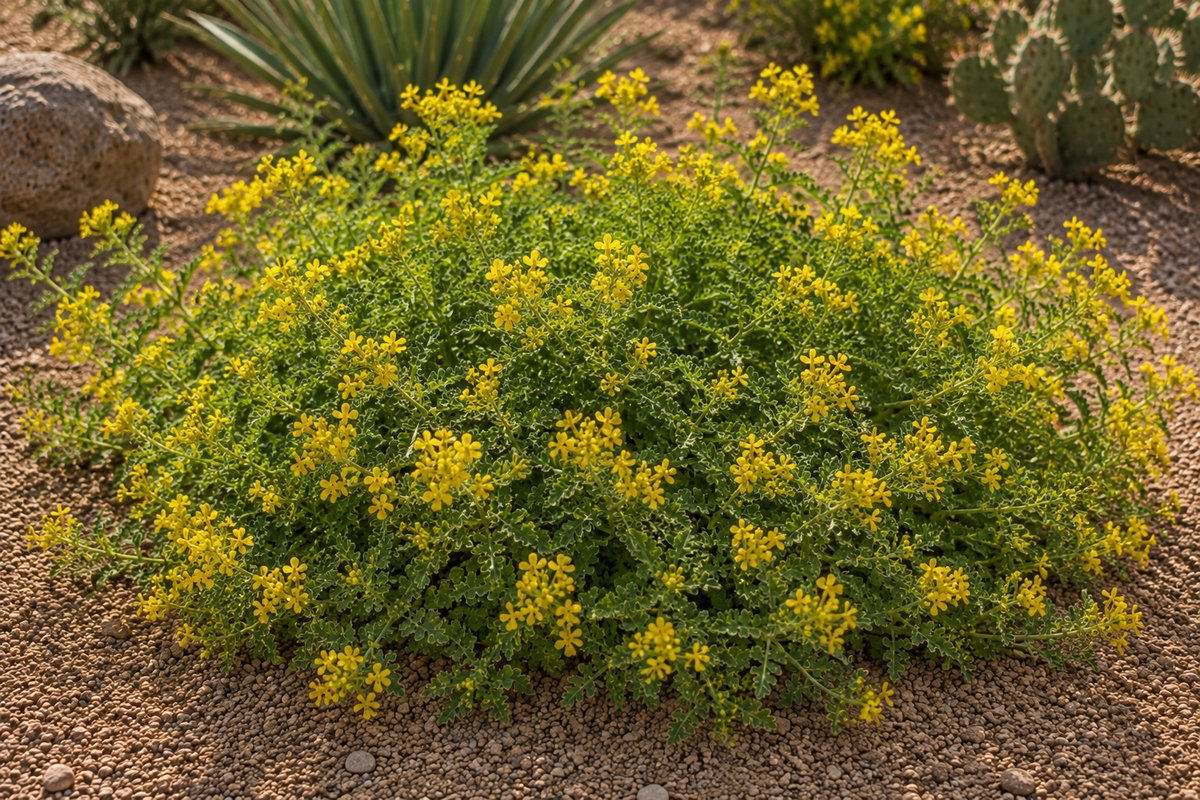
Trailing Smokebush at a glance
- Water use
- Low (established)
- Sun
- Full sun; tolerates reflected heat.
- Mature size
- 12-18 in H x 3-4 ft W
- Growth rate
- Moderate to fast
- Bloom
- Yellow, Spring and fall (roughly March-May and again in autumn), with sporadic bloom in between.
- Cold hardiness
- Hardy to about 10-15 F (USDA zones 8-11); may suffer minor frost damage in hard freezes but recovers.
- Soil
- Well-drained soils; tolerates poor, rocky, and alkaline desert soils. As a legume it fixes nitrogen.
- Native range
- Species native to Mexico; 'Sierra Gold' is a low-desert landscape selection. Not native to Arizona/Sonoran Desert.
- Best used as
- Groundcover, Slopes and erosion control, Mass plantings, Borders and parking medians, Spilling over walls
- Wildlife
- Bright green ferny foliage and flowers attract bees and other pollinators; provides habitat. Deer resistant.
- Toxicity
- Not known to be toxic.
How to grow Trailing Smokebush in Tucson & the low desert
Watering
Drought tolerant once established; in Tucson water deeply every 1-2 weeks in summer and monthly or less in winter. Avoid frequent shallow irrigation.
Fertilizer & nutrients
Little to none needed; as a nitrogen-fixing legume it thrives in lean soils. Skip high-nitrogen fertilizer, which causes rank, floppy growth.
Pruning & care
Shear lightly after flowering to keep dense and tidy; tip-prune to control spread. Avoid heavy shearing into old wood.
Notes
A low, spreading, mat-forming groundcover with fine, fragrant (lemony-scented) bright green foliage that stays green most of the year in Tucson. Excellent for filling large areas and softening hardscape. One of the most reliable low-water groundcovers for the low desert.
Sources: AMWUA Landscape Plants for the Arizona Desert; University of Arizona Cooperative Extension; Arizona-Sonora Desert Museum; Mountain States Wholesale Nursery references