
Groundcover
Trailing Indigo Bush
Dalea greggii · Fabaceae
Also called: Gregg Dalea, Gregg's Prairie Clover, Trailing Smokebush
Trailing Indigo Bush (Dalea greggii) is a very low-water groundcover well suited to Tucson and the low desert. It grows to 8-12 in H x 4-6 ft W (can spread to 8 ft), with a moderate to fast growth rate.
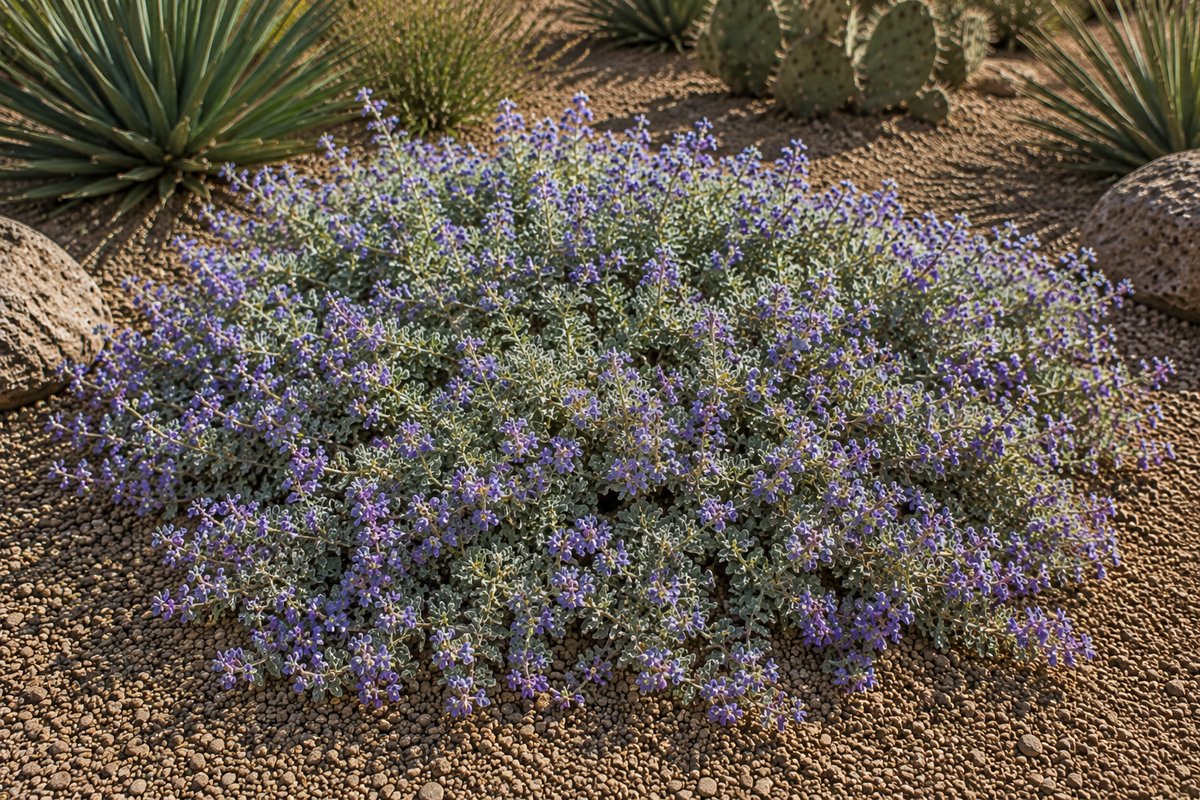
Trailing Indigo Bush at a glance
- Water use
- Very Low (established)
- Sun
- Full sun and reflected heat; needs full sun for dense, tight growth. Thins and grows leggy in shade.
- Mature size
- 8-12 in H x 4-6 ft W (can spread to 8 ft)
- Growth rate
- Moderate to Fast
- Bloom
- Small purple to lavender (indigo) pea-like flowers., Spring (mainly March-May), with sporadic bloom after summer rains; flowers are small and secondary to the silvery foliage.
- Cold hardiness
- Hardy to about 10-15°F (USDA zones 8-11); root-hardy and recovers readily from occasional frost. Foliage may show minor tip burn in hard freezes.
- Soil
- Requires excellent drainage; thrives in lean, rocky, sandy, and alkaline native desert soils. As a legume it tolerates very poor, infertile ground. Rots in heavy, poorly drained, or overwatered soils.
- Native range
- Chihuahuan Desert of West Texas and north-central Mexico; not native to the Sonoran Desert but extremely well adapted to Tucson's low desert.
- Best used as
- Groundcover, Slope and bank erosion control, Mass plantings in xeriscapes, Spilling over walls and rock edges, Revegetation and low-maintenance commercial landscapes
- Wildlife
- Flowers provide nectar for bees and native pollinators; foliage offers cover for small wildlife. A larval/host plant in the legume family for some butterflies.
- Toxicity
- Not known to be significantly toxic; no notable toxicity reported for people or pets.
How to grow Trailing Indigo Bush in Tucson & the low desert
Watering
Very drought-tolerant once established — deep soak about once a month in summer keeps it lush; survives on rainfall alone in many years. Overwatering causes legginess and rot, so keep it lean.
Fertilizer & nutrients
None needed; as a nitrogen-fixing legume it thrives in poor soil. Fertilizer is unnecessary and promotes rank, open growth.
Pruning & care
Minimal. Lightly shear or trim runners to control spread and encourage density; cut back occasional dead or frost-touched stems in spring. Avoid hard pruning into bare old wood.
Notes
Tough, fine-textured, silvery-gray-green evergreen groundcover that roots as it spreads, making it superb for stabilizing dry slopes. One of the toughest, most heat- and drought-proof groundcovers for Tucson; nearly maintenance-free in lean, well-drained sites. Branches root where they touch soil, knitting together for dense cover and excellent erosion control.
Sources: University of Arizona Cooperative Extension; AMWUA 'Landscape Plants for the Arizona Desert'; Arizona-Sonora Desert Museum; Tohono Chul / Tucson Botanical Gardens