
Grass · Sonoran native
Arizona Cottontop
Digitaria californica · Poaceae
Also called: Cottontop, California Cottontop
Arizona Cottontop (Digitaria californica) is a very low-water grass native to the Sonoran Desert region well suited to Tucson and the low desert. It thrives in full sun.
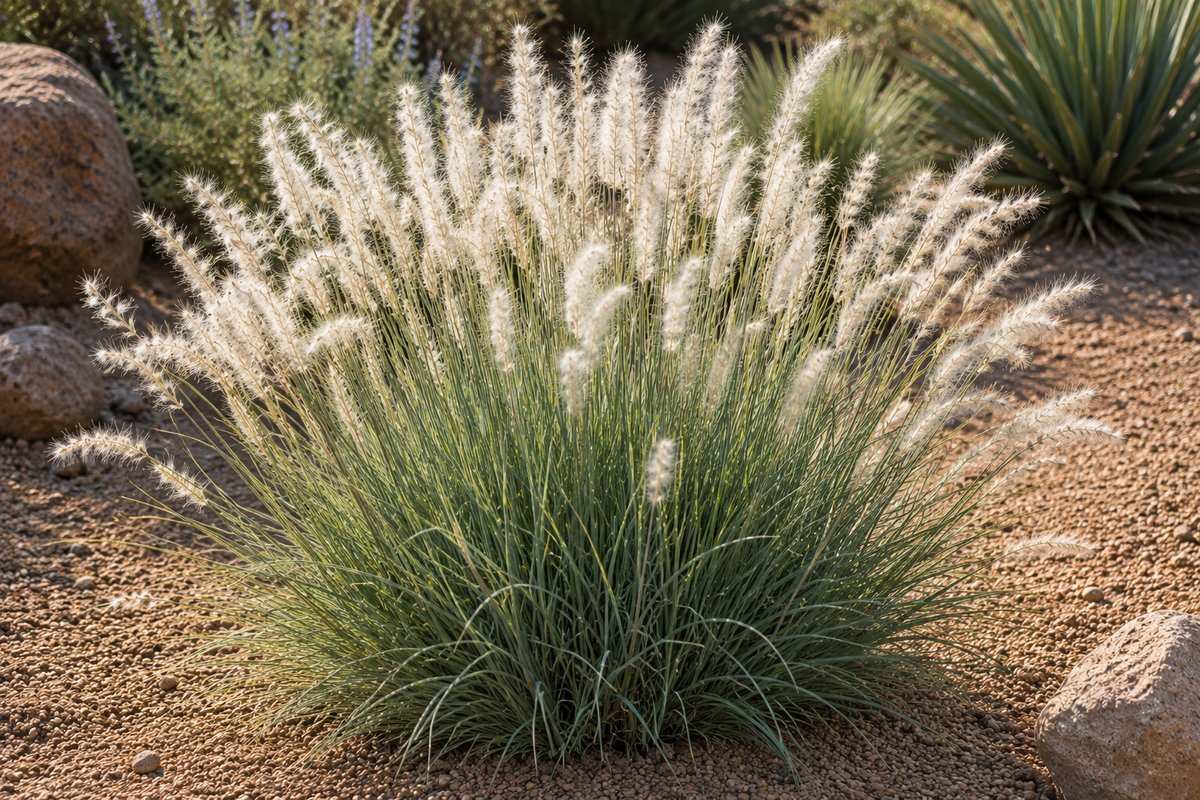
Arizona Cottontop at a glance
- Water use
- Very Low (established)
- Sun
- Full sun
- Mature size
- 1.5-3 ft H x 1-2 ft W
- Growth rate
- Moderate; warm-season grower active with summer heat and rain
- Bloom
- Silvery white to purplish, cottony seedheads, Warm season, roughly March-November, peaking with summer monsoon rains
- Cold hardiness
- Hardy to roughly 0-10 F (about USDA zones 7-10); root-hardy, tops freeze back
- Soil
- Open, well-drained sites; tolerant of rocky, sandy, and clay-loam desert soils. Prefers good drainage.
- Native range
- Native from the southwestern United States (Arizona, New Mexico, Texas, California) through central Mexico; common on plains, mesas, and rocky hillsides throughout the Sonoran and Chihuahuan deserts.
- Best used as
- Ornamental native grass, Revegetation and erosion control, Wildlife habitat, Range forage
- Wildlife
- Excellent seed source for quail, doves, sparrows, and other granivorous birds; provides cover for small wildlife. Valuable, palatable forage grass.
- Toxicity
- Non-toxic; safe forage for livestock and wildlife.
How to grow Arizona Cottontop in Tucson & the low desert
Watering
Highly drought tolerant once established; in Tucson, deep-water once or twice monthly during the dry hot season and let monsoon rains carry it. Too much water reduces the attractive cottony seedheads.
Fertilizer & nutrients
Needs no fertilizer in native soils; a single light spring nitrogen feeding can be used in ornamental settings but is unnecessary.
Pruning & care
Shear or cut back to 3-4 inches in late winter (Feb) to refresh the clump before warm-season growth; leave seedheads through fall for ornamental and wildlife value.
Notes
Accepted name is Digitaria californica; Trichachne californica is an older synonym. Prized for its fluffy, silvery-white 'cottontop' seedheads that glow when backlit, making it one of the most ornamental native bunchgrasses for desert landscapes.
Sources: USDA Forest Service FEIS (Digitaria californica); University of Arizona Cooperative Extension; Arizona-Sonora Desert Museum; Lady Bird Johnson Wildflower Center