
Fruit Tree
Common Fig 'Black Mission'
Ficus carica 'Black Mission' · Moraceae
Also called: Mission Fig, Franciscana Fig, Beers Black Fig
Common Fig 'Black Mission' (Ficus carica 'Black Mission') is a moderate-water fruit tree well suited to Tucson and the low desert.
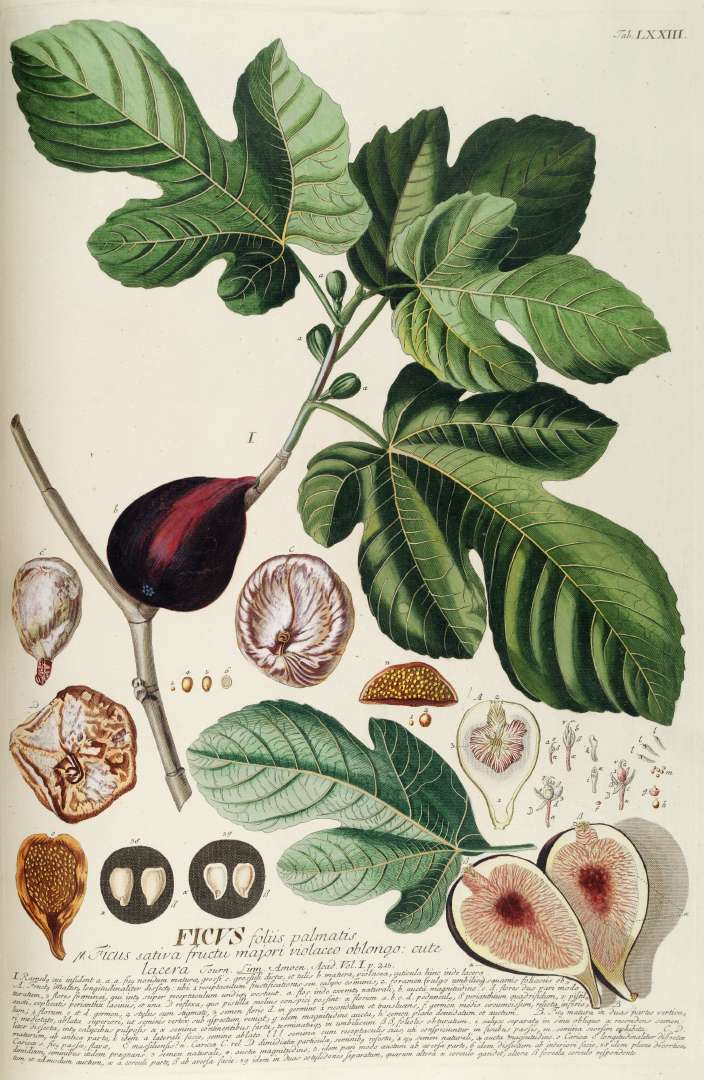
Common Fig 'Black Mission' at a glance
- Water use
- Moderate (established)
- Sun
- Full sun, 8-10 hours daily, for best fruit production. Tolerates Tucson heat well; young trunks benefit from shade-cloth or whitewash to prevent sunburn.
- Mature size
- 15-25 ft tall and wide if unpruned; easily kept 10-15 ft with pruning.
- Growth rate
- Moderate to fast.
- Bloom
- Inconspicuous (flowers are inside the fruit/syconium); no showy bloom, Two crops in Tucson: a lighter breba crop in early summer (late June) and the main crop mid-July through August/September. Dark purple-black fruit with pink-amber flesh.
- Cold hardiness
- Hardy to about 15-18°F; deciduous and dormant in winter, so fully hardy in Tucson (USDA 9a-9b). Late frosts may nip new spring growth but trees recover.
- Soil
- Adaptable; tolerates Tucson's alkaline soils but needs good drainage. Improve with compost. Avoid soggy ground.
- Native range
- Western Asia/Mediterranean origin; this clone was distributed via the California missions. Not native to Arizona.
- Best used as
- Fresh eating, Drying and preserves (preserves better than 'Brown Turkey'), Shade/specimen fruit tree, Edible landscape
- Wildlife
- Ripe figs draw birds and other wildlife; may need netting to protect the crop.
- Toxicity
- Fruit edible. The milky latex in leaves/stems and unripe fruit is a skin/eye irritant and can be toxic if ingested by pets; sap can cause contact dermatitis and phytophotodermatitis. Wear gloves when pruning.
How to grow Common Fig 'Black Mission' in Tucson & the low desert
Watering
Deep, regular irrigation in the heat for good fruit set and to prevent fruit drop and splitting: roughly every 5-7 days in peak summer, less in spring/fall, monthly in winter dormancy. Mulch heavily; figs have shallow roots that resent drying out during fruiting.
Fertilizer & nutrients
Light feeder. One or two applications of a balanced fertilizer or nitrogen in late winter/early spring as growth begins; avoid excess nitrogen, which delays/reduces fruit and pushes soft growth. Compost/mulch usually sufficient in good soil.
Pruning & care
Prune while dormant (winter) to shape and control size and keep fruit reachable. Note the early-summer breba crop forms on last year's wood, so heavy winter pruning sacrifices that first crop; the main late-summer crop forms on new wood.
Notes
An excellent low-desert fig: needs under ~300 chill hours, thrives in Tucson heat and is fairly drought-tolerant once established. Plant in fall or early spring so roots establish before summer. Common closely related cultivar names include 'Beers Black' and 'Franciscana'.
Sources: University of Arizona Cooperative Extension - Growing Common Figs in the Low Desert (az1636); Civano Nursery (Tucson) plant catalog - Black Mission Fig; Arizona-Sonora Desert Museum / AMWUA edible desert plant guidance