
Annual · Sonoran native
Sunflower (annual)
Helianthus annuus · Asteraceae
Also called: Common Sunflower, Annual Sunflower
Sunflower (annual) (Helianthus annuus) is a low-water annual native to the Sonoran Desert region well suited to Tucson and the low desert. It thrives in full sun, with a fast growth rate.
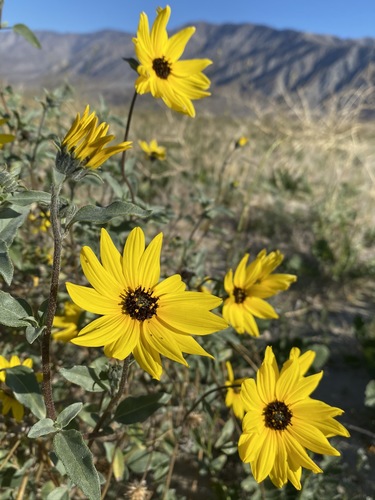
Sunflower (annual) at a glance
- Water use
- Low (established)
- Sun
- Full sun; needs maximum sun and tolerates Tucson's intense heat. Heads track the sun when young.
- Mature size
- Dwarf 1-3 ft to giant 6-12+ ft tall depending on variety; 1-3 ft wide
- Growth rate
- Fast
- Bloom
- Yellow (classic), plus gold, orange, bronze, red, and bicolors in cultivars; dark or yellow central disk, Late spring through fall depending on sowing; roughly 60-90 days from seed to bloom. Spring and monsoon sowings give early-summer and fall flowers.
- Cold hardiness
- Frost-sensitive (USDA 9a-9b); a warm-season annual completing its cycle in one season and killed by frost. Heat-tolerant.
- Soil
- Adaptable; tolerates poor to moderately fertile, well-drained soils including alkaline desert soils. Loosen compacted native soil for the deep taproot.
- Native range
- North America, including Arizona and the Sonoran Desert region (native wild annual sunflower)
- Best used as
- Tall summer color and screening, Cut flowers, Edible seeds for people and wildlife, Pollinator and bird gardens, Children's gardens / fast-growing showpiece
- Wildlife
- Outstanding for pollinators (bees, butterflies) in bloom and for seed-eating birds (finches, doves, etc.) as heads mature; a Sonoran Desert native that supports local wildlife.
- Toxicity
- Non-toxic to humans and pets; seeds are edible. (Note: sunflower roots are mildly allelopathic and can inhibit some nearby plants.)
How to grow Sunflower (annual) in Tucson & the low desert
Watering
Water deeply 2-3 times weekly while establishing and during rapid growth/bud set, then reduce; deep, infrequent irrigation encourages strong roots and drought tolerance. Warm-season annual in Tucson: direct-sow seed in spring (Mar-Apr) after frost, or again with monsoon (Jul-Aug) for fall bloom. Avoid sowing into the worst pre-monsoon June heat without irrigation.
Fertilizer & nutrients
Moderate feeder for large blooms; work compost or a balanced fertilizer into the bed at planting. Phosphorus supports flowering; avoid excess nitrogen which yields leaves over flowers and weak, floppy stems.
Pruning & care
No pruning needed for single-stem types; pinch branching/multi-head varieties early for more (smaller) blooms. Stake tall varieties in windy/monsoon-storm areas. Deadhead for tidiness or leave heads for birds and seed harvest.
Notes
A Sonoran Desert native annual, well adapted to Tucson heat and a natural choice for monsoon-season sowing. Direct-sow seed rather than transplanting for a strong taproot. Stake tall varieties against summer monsoon winds and provide deep watering during the establishment and flowering phase.
Sources: University of Arizona Cooperative Extension (Pima County Master Gardeners); Arizona-Sonora Desert Museum (native plant references); AMWUA / low-desert planting calendars