
Houseplant
Prayer Plant
Maranta leuconeura · Marantaceae
Also called: Herringbone Plant, Rabbit's Foot, Rabbit Tracks
Prayer Plant (Maranta leuconeura) is a moderate-water houseplant well suited to Tucson and the low desert. It's a moderate-growing houseplant.
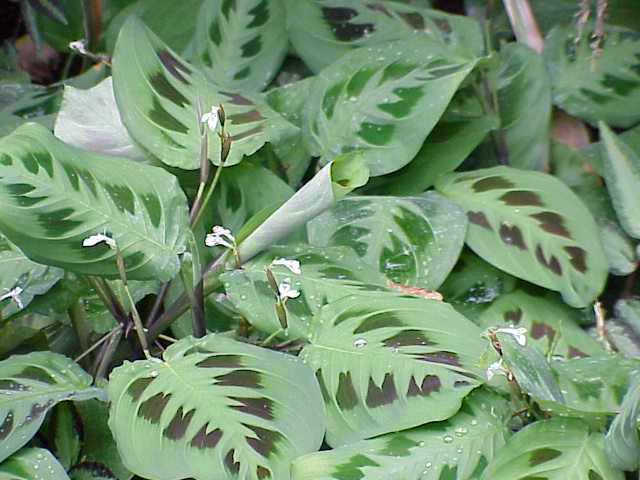
Prayer Plant at a glance
- Water use
- Moderate (established)
- Sun
- Bright indirect light indoors; tolerates medium/low light. Direct Tucson sun fades and scorches the patterned leaves, so avoid unfiltered south/west windows. Leaves fold upward ('pray') at night and open by day.
- Mature size
- 8-12 in tall, spreading 12-18 in wide; low, mounding to trailing habit
- Growth rate
- Moderate
- Bloom
- Small white to pale lavender flowers (insignificant; grown for foliage), Spring to summer indoors (rarely blooms indoors)
- Cold hardiness
- Frost-tender; keep above 55-60°F indoors (ideal 65-75°F). Cannot survive frost, intense sun, or low humidity outdoors in Tucson.
- Soil
- Rich, well-draining, slightly acidic potting mix high in organic matter (peat/coir with perlite). Resents alkaline conditions, so avoid Tucson native soil entirely.
- Native range
- Tropical rainforests of Brazil
- Best used as
- Indoor foliage houseplant, Hanging baskets and shelves, Terrariums, Low-light rooms
- Wildlife
- None indoors.
- Toxicity
- Non-toxic / pet-safe. ASPCA lists Maranta as non-toxic to dogs and cats—safe around pets and children.
How to grow Prayer Plant in Tucson & the low desert
Watering
Grown only as an indoor houseplant in Tucson. Keep the soil lightly and evenly moist—never soggy and never bone dry—watering when the top half-inch dries, often weekly. Use room-temperature distilled, rainwater, or filtered water; Tucson's hard, salty, alkaline tap water causes brown leaf tips. This plant is sensitive to the dry desert indoor air.
Fertilizer & nutrients
Feed every 2 weeks in spring and summer with a balanced houseplant fertilizer at half strength; reduce to monthly or none in winter. Sensitive to fertilizer salt buildup—flush the pot periodically to prevent leaf-tip burn.
Pruning & care
Trim brown leaf tips and remove dead or faded leaves. Cut leggy stems back to encourage bushier growth; trimmings can be propagated by division.
Notes
Strictly an indoor plant in Tucson—it demands the high humidity and protection from sun and frost that the low desert cannot provide outdoors. Boosting humidity with a pebble tray, grouping plants, or a humidifier helps counter Tucson's very dry indoor air. Brown crispy leaf edges almost always signal hard tap water, low humidity, or fertilizer salts.
Sources: University of Arizona Cooperative Extension; ASPCA Toxic and Non-Toxic Plant List; Missouri Botanical Garden Plant Finder