
Fruit Tree
Fruiting Olive 'Manzanillo'
Olea europaea 'Manzanillo' · Oleaceae
Also called: Manzanilla Olive, Spanish/Common Olive 'Manzanillo', Fruiting Olive
Fruiting Olive 'Manzanillo' (Olea europaea 'Manzanillo') is a low-water fruit tree well suited to Tucson and the low desert. It thrives in full sun, with a slow to moderate growth rate. Expect creamy white blooms Profuse creamy-white flowers in spring.
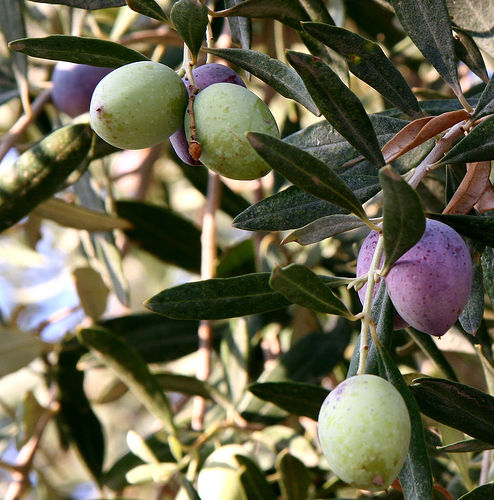
Fruiting Olive 'Manzanillo' at a glance
- Water use
- Low (established)
- Sun
- Full sun.
- Mature size
- 20-30 ft tall and 20-25 ft wide; often kept smaller and multi-trunked.
- Growth rate
- Slow to moderate
- Bloom
- Creamy white, Profuse creamy-white flowers in spring (April-May), heavy windborne pollen; fruit ripens green-to-black in fall (Oct-Nov) and is cured/pickled.
- Cold hardiness
- Hardy in Tucson (USDA 9a-9b); tolerates brief lows into the low 20s F with minor tip damage. Hard freezes below ~15 F can damage young trees.
- Soil
- Very adaptable to poor, rocky, alkaline desert soils; requires good drainage and tolerates caliche better than most fruit trees.
- Native range
- Species native to the Mediterranean basin. Not native to Arizona.
- Best used as
- Edible cured olives, Drought-tolerant shade/specimen tree, Mediterranean-style landscaping (where permitted)
- Wildlife
- Birds eat ripe fruit and can spread seedlings.
- Toxicity
- Cured fruit is edible; raw olives are bitter but not toxic. Foliage and fruit are not significantly toxic to pets. The main human-health issue is allergenic pollen, not ingestion.
How to grow Fruiting Olive 'Manzanillo' in Tucson & the low desert
Watering
Very drought-tolerant once established; deep watering every 10-14 days in summer and monthly or less in winter produces better fruit, but the tree survives on much less. Avoid constant shallow watering and poor drainage.
Fertilizer & nutrients
Light feeder; an annual spring application of nitrogen or balanced fertilizer is sufficient. Excess nitrogen reduces fruiting.
Pruning & care
Prune in late winter/early spring to open the canopy, control height, and remove suckers and water sprouts; olives tolerate heavy pruning. (Note: pruning off flowers is sometimes used elsewhere to reduce fruit/pollen, but fruiting cultivars are restricted in Pima County regardless.)
Notes
IMPORTANT FOR TUCSON: Fruiting (pollen-producing) olives such as 'Manzanillo' are RESTRICTED under Pima County and City of Tucson anti-allergen ordinances dating to the 1960s due to highly allergenic spring pollen; sale/planting of fruiting olives is prohibited. For clients wanting an olive look, recommend the exempt low/no-pollen, fruitless 'Swan Hill' cultivar (researched at U of A). 'Manzanillo' is a classic California table/curing olive and self-fertile, but should not be specified for new Tucson plantings without verifying current code.
Sources: Pima County / City of Tucson olive-tree (pollen) ordinances; University of Arizona research on Swan Hill low-pollen olive; AMWUA / Arizona-Sonora Desert Museum plant references