
Cactus · Sonoran native
Arizona Queen of the Night
Peniocereus striatus · Cactaceae
Also called: Dahlia-rooted Cereus, Gearstem Cactus, Sacamatraca, Night-blooming Cereus
Arizona Queen of the Night (Peniocereus striatus) is a very low-water cactus native to the Sonoran Desert region well suited to Tucson and the low desert. It's a slow-growing cactus.
Arizona Queen of the Night at a glance
- Water use
- Very Low (established)
- Sun
- Full sun to partial/filtered shade; in habitat almost always grows up through a nurse shrub or tree such as creosote, bursage, or palo verde.
- Mature size
- Stems 2-4 ft H (occasionally to 6 ft); sprawling clump 2-3 ft W. Wiry, pencil-thin, 4-6 ribbed gray-green stems arising from a large tuberous root.
- Growth rate
- Slow
- Bloom
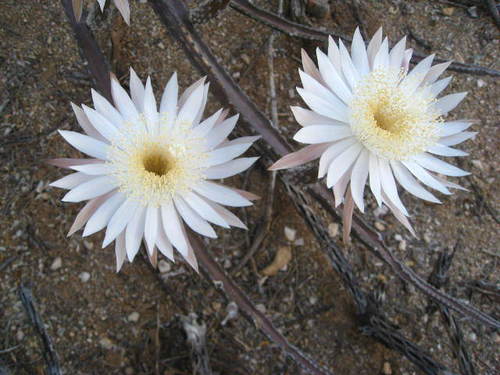
- White to pinkish-white, fragrant nocturnal funnel-shaped flowers 2-3 in across (smaller than P. greggii), Late spring to early summer (May-July), opening for a single night
- Cold hardiness
- Hardy to about 25 F; USDA zones 9-11. Tolerates light frost when dry; protect or site under canopy in colder Tucson microclimates.
- Soil
- Sharply drained rocky, gravelly, or sandy desert soils; intolerant of heavy, poorly drained clay. Prefers a coarse mineral mix.
- Native range
- Sonoran Desert of southern Arizona (Pima, Santa Cruz counties), Sonora, Sinaloa, and Baja California, Mexico
- Best used as
- Specimen/collector cactus, Naturalistic and native desert gardens, Nurse-plant understory plantings, Nighttime/moon garden interest
- Wildlife
- Night-blooming flowers are pollinated by sphinx (hawk) moths; small red fruits eaten by birds and small mammals. Stems are cryptic and easily overlooked among shrubs.
- Toxicity
- Not considered toxic to humans or pets; spines are minor. The tuberous root has been used in traditional medicine.
How to grow Arizona Queen of the Night in Tucson & the low desert
Watering
Once established, needs essentially no supplemental irrigation in Tucson; rely on summer monsoon rain. Water only deeply during prolonged drought (every 3-4 weeks in extreme heat); keep dry in winter to prevent rot.
Fertilizer & nutrients
Not needed and generally not recommended; the plant is adapted to nutrient-poor desert soils. A very light, dilute cactus feed in spring is the most that should ever be applied.
Pruning & care
None required. Remove only dead or damaged stems with clean cuts; the wiry stems are sparse and benefit from the support of a nurse plant rather than pruning.
Notes
A cryptic, rarely seen native often mistaken for the larger-flowered Peniocereus greggii (Reina-de-la-noche). Best appreciated as a curiosity for its single spectacular night of bloom. Stems blend into surrounding shrubs by day. Grows from a large dahlia-like tuberous root that stores water.
Sources: University of Arizona Cooperative Extension; Arizona-Sonora Desert Museum; Tohono Chul (Tucson) Queen of the Night references; SEINet / Arizona Flora