
Fruit Tree
Tropical Guava
Psidium guajava · Myrtaceae
Also called: Common Guava, Apple Guava, Lemon Guava
Tropical Guava (Psidium guajava) is a moderate-water fruit tree well suited to Tucson and the low desert. It thrives in full sun, with a fast growth rate. Expect white blooms spring through summer.
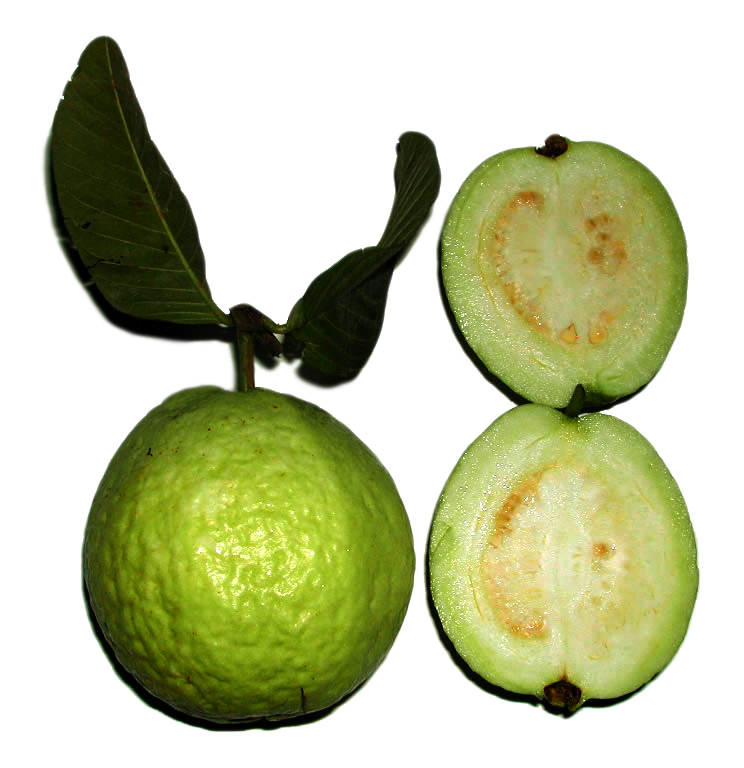
Tropical Guava at a glance
- Water use
- Moderate (established)
- Sun
- Full sun; site in a warm microclimate (south/west wall, courtyard) for frost protection in Tucson.
- Mature size
- 10-20 ft tall and wide (often kept to 8-12 ft in cultivation); can be a large shrub or small tree.
- Growth rate
- Fast
- Bloom
- White, Spring through summer (warm season); self-fruitful. Fruit ripens late summer into fall; flowering/fruiting can be erratic in Tucson due to winter freezes.
- Cold hardiness
- Frost-sensitive (the least cold-hardy of these). Damaged below ~28-30°F and can be killed to the ground by hard freezes; needs frost protection or a warm microclimate in Tucson (borderline for USDA 9a-9b). Often grown as a die-back-and-resprout shrub or in containers moved to shelter.
- Soil
- Very adaptable - sand to clay; prefers well-drained soil and tolerates a wide pH range including alkaline soils, though chlorosis is common.
- Native range
- Native to tropical Mexico, Central America, and northern South America.
- Best used as
- Edible fruit (fresh, juice, jams, paste), Tropical-look ornamental, Container/patio plant (movable for frost protection)
- Wildlife
- Flowers attract bees; fruit attracts birds and other wildlife.
- Toxicity
- Non-toxic; fruit and leaves are edible/safe for pets and children (guava leaf is used in herbal teas).
How to grow Tropical Guava in Tucson & the low desert
Watering
Needs regular, consistent water - deep irrigation about every 5-7 days in summer heat; reduce in winter. Drought stress causes fruit and leaf drop, but soil must drain well.
Fertilizer & nutrients
Heavy feeder for good fruiting. Apply nitrogen-rich fruit-tree fertilizer every 1-2 months during the warm growing season (spring through early fall); guava responds strongly to feeding. Supplement iron and zinc chelates, as it is prone to micronutrient chlorosis on alkaline desert soils.
Pruning & care
Prune in late winter/early spring after frost danger to remove cold-damaged wood, control size, and encourage new growth (fruit forms on new wood). Can be kept as a 6-10 ft shrub or hedge with regular tip-pruning.
Notes
True tropical guava is the most cold-tender plant on this list and is marginal in Tucson - best grown in a protected warm microclimate or as a container plant that can be sheltered during freezes. Do not confuse with the much hardier pineapple guava (Acca sellowiana). Plant in spring after frost; protect young plants their first winters.
Sources: University of Arizona Cooperative Extension - frost-tender subtropical fruit guidance; University of Florida IFAS Gardening Solutions - Guava; AMWUA / Arizona desert fruit references