
Fruit Tree
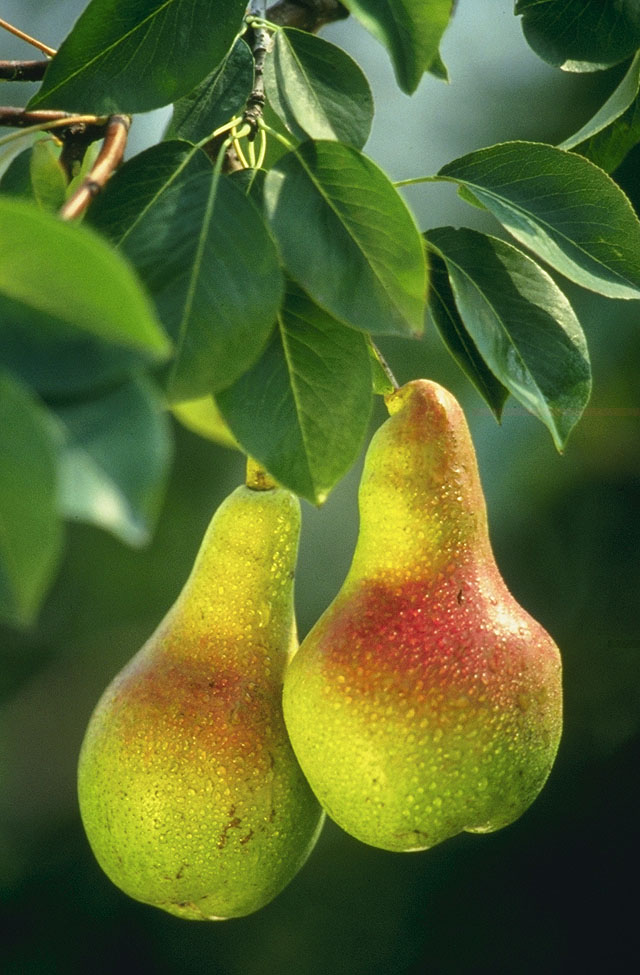
Hood Pear
Pyrus communis 'Hood' · Rosaceae
Also called: Hood Asian-European pear, Common pear 'Hood'
Hood Pear (Pyrus communis 'Hood') is a moderate-water fruit tree well suited to Tucson and the low desert. It thrives in full sun, with a moderate growth rate. Expect white blooms spring.
Hood Pear at a glance
- Water use
- Moderate (established)
- Sun
- Full sun (6+ hours).
- Mature size
- 15-20 ft tall, 12-15 ft wide if unpruned; commonly kept to 10-15 ft.
- Growth rate
- Moderate
- Bloom
- White, Spring (March); NOT reliably self-fruitful - plant with a compatible low-chill pollinizer such as 'Flordahome' (or another overlapping-bloom pear) for good crops. Fruit ripens midsummer.
- Cold hardiness
- Very low chill (~150-200 hours), making it one of the few pears that fruits reliably in Tucson; cold-hardy and fully frost-tolerant in USDA 9a-9b.
- Soil
- Adaptable; prefers deep, well-drained loam but tolerates clay. Handles alkaline Tucson soils, with occasional micronutrient (iron/zinc) needs.
- Native range
- European pear species native to Europe and western Asia; 'Hood' is a low-chill cultivar developed for the southeastern/southern U.S.
- Best used as
- Edible fresh pears, Canning/cooking, Pollinizer for other low-chill pears, Small orchard/specimen tree
- Wildlife
- Blossoms attract bees; ripe fruit attracts birds.
- Toxicity
- Fruit is non-toxic and edible. Seeds contain trace cyanogenic compounds typical of pome fruit - not for consumption; keep away from pets and children.
How to grow Hood Pear in Tucson & the low desert
Watering
Deep, infrequent watering to 2-3 ft; approximately weekly in summer heat, less in spring/fall, minimal in winter dormancy. Consistent moisture during fruit development improves size and prevents drop.
Fertilizer & nutrients
Moderate feeder. Apply nitrogen-containing fruit-tree fertilizer in late winter and again in spring; keep nitrogen modest to limit succulent growth that invites fire blight. Supplement iron and zinc chelates if interveinal chlorosis appears on alkaline desert soil.
Pruning & care
Train to a central-leader or modified-leader form. Prune in winter dormancy to maintain structure and remove water sprouts; fruit borne on long-lived spurs, so preserve spur wood. Promptly cut out fire-blight strikes 8-12 in. into healthy wood and sterilize tools between cuts.
Notes
'Hood' is a soft, sweet European-type pear bred for low chill, one of the best pear choices for the low desert. Highly recommended to interplant with another low-chill pear for cross-pollination. Fire blight is the main concern in our climate - choose a sunny, airy site and avoid excess nitrogen/overhead irrigation. Plant bare-root in January-February.
Sources: University of Arizona Cooperative Extension - Deciduous Fruit and Nuts for the Low Desert; Pima County Master Gardeners; Dave Wilson Nursery / low-chill pear variety guides