
Rose
Julia Child Floribunda Rose
Rosa 'WEKvossutono' · Rosaceae
Also called: Julia Child Rose, Absolutely Fabulous (UK), Soul Mate (Australia)
Julia Child Floribunda Rose (Rosa 'WEKvossutono') is a moderate-water rose well suited to Tucson and the low desert. It thrives in full sun in cooler months, with a moderate growth rate. Expect buttery golden-yellow blooms Repeat-blooms spring through fall.
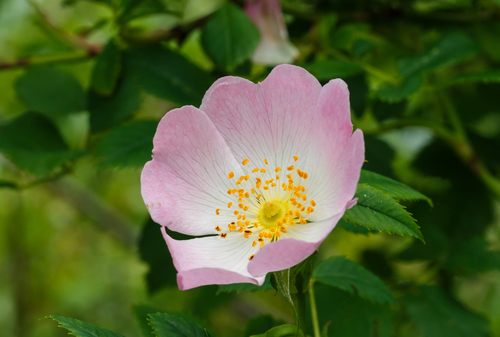
Julia Child Floribunda Rose at a glance
- Water use
- Moderate (established)
- Sun
- Full sun in cooler months; in Tucson give morning sun with light afternoon shade in summer to reduce heat and sunburn stress. Aim for at least 6 hours of sun, favoring morning exposure.
- Mature size
- 2-3 ft tall and wide typically; can reach 4-5 ft in warm climates like Tucson.
- Growth rate
- Moderate
- Bloom
- Buttery golden-yellow, Repeat-blooms spring through fall (and into mild winters); heaviest flushes in spring and fall, with reduced bloom during peak summer heat.
- Cold hardiness
- Cold-hardy to about USDA zone 5; fully hardy in Tucson (9a-9b) with no frost protection needed. Heat is the limiting factor, not cold.
- Soil
- Well-drained, amended loam enriched with compost; tolerates but is challenged by Tucson's alkaline, low-organic soils, so amend planting holes and mulch annually.
- Native range
- Hybrid cultivar (bred 2004 by Tom Carruth / Weeks Roses, USA); roses are not native to the Sonoran Desert.
- Best used as
- Landscape color/border, Mass planting, Container, Cut flowers, Pollinator interest
- Wildlife
- Attracts bees and other pollinators; fragrant licorice-clove scent.
- Toxicity
- Non-toxic to dogs, cats, and humans; thorns can cause physical scratches.
How to grow Julia Child Floribunda Rose in Tucson & the low desert
Watering
Deep soak 2-3 ft into the root zone; water every 2-3 days in summer heat, every 5-7 days in spring/fall, and roughly every 10-14 days in winter. Use drip irrigation and a 3-4 in organic mulch to conserve moisture and cool roots.
Fertilizer & nutrients
Roses are heavy feeders: apply a balanced rose food or slow-release fertilizer monthly from after the late-January/February prune through October, then stop. Supplement with iron/chelated micronutrients to counter chlorosis in Tucson's alkaline soils.
Pruning & care
Hard prune in mid-to-late January (Tucson's main rose-pruning window), cutting back by about one-third to one-half and removing dead/crossing canes. Deadhead spent blooms through the season to keep it reblooming.
Notes
2006 All-America Rose Selections (AARS) winner; one of the most disease-resistant, heat-tolerant floribundas, making it a strong performer in Tucson. Plant bare-root in January or container roses in fall/early spring. Provide afternoon shade and consistent deep watering to carry it through summer; black spot pressure is low in Tucson's dry climate.
Sources: University of Arizona Cooperative Extension (extension.arizona.edu) - Pima County rose care and monthly gardening guides; Tucson Rose Society pruning guidance; North Carolina Extension Gardener Plant Toolbox (plants.ces.ncsu.edu) - Rosa 'WEKvossutono'; Weeks Roses / AARS cultivar records