
Vine
Boysenberry
Rubus ursinus x R. idaeus 'Boysen' · Rosaceae
Also called: Boysen blackberry, trailing blackberry hybrid
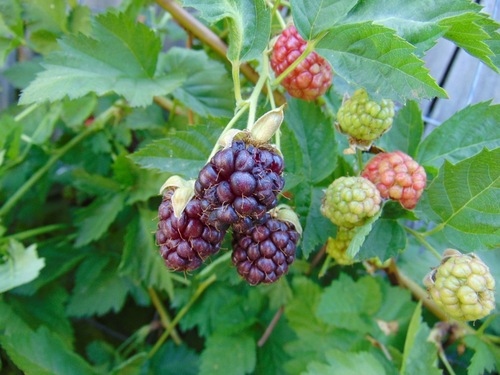
Boysenberry (Rubus ursinus x R. idaeus 'Boysen') is a high-water vine well suited to Tucson and the low desert. It thrives in full sun in winter/spring, with a fast growth rate.
Boysenberry at a glance
- Water use
- High (established)
- Sun
- Full sun in winter/spring; benefits from afternoon shade or 30-50% shade cloth during Tucson's intense May-September heat to prevent scald and protect fruit.
- Mature size
- Trailing canes 5-8+ ft long, 2-3 ft tall on a trellis; spreads several feet wide
- Growth rate
- Fast
- Bloom
- White to pale pink flowers; fruit deep maroon-purple, Blooms early-mid spring (March-April); fruit ripens late spring into early summer (May-June) in Tucson, ahead of peak heat.
- Cold hardiness
- Hardy to about 0-10°F when dormant; foliage and tender canes frost-sensitive. Heat, not cold, is the main limiting factor in Tucson.
- Soil
- Rich, well-drained loam high in organic matter, pH 5.8-6.8; Tucson's alkaline, low-organic soils must be heavily amended with compost, and raised beds are recommended.
- Native range
- Hybrid of trailing blackberry, raspberry, and loganberry; developed in California (early 20th century)
- Best used as
- Edible fruit / home orchard, Trellis or fence crop, Jams, pies, fresh eating
- Wildlife
- Flowers attract bees and other pollinators; ripe fruit attracts birds (netting often needed).
- Toxicity
- Non-toxic to humans, dogs, and cats; canes have thorns (thornless selections exist) that can scratch.
How to grow Boysenberry in Tucson & the low desert
Watering
Keep root zone consistently moist, never soggy; deep water 2-3 times per week in spring as canes and fruit develop, and increase to near-daily or use drip with heavy mulch through the dry early summer (May-June). Tapers in winter dormancy. A challenging marginal crop in the low desert due to heat and water demand.
Fertilizer & nutrients
Apply a balanced fertilizer (e.g., 10-10-10) in late winter as growth resumes and again after harvest; supplement with nitrogen for cane vigor. Iron chelate corrects chlorosis common in Tucson's alkaline soils.
Pruning & care
Floricane-fruiting (biennial canes): after the summer harvest, remove the canes that fruited at ground level; train and tie new primocanes to a trellis/wire for next year's crop. Thin to the strongest 4-6 canes per plant.
Notes
Best treated as a high-input, marginal backyard fruit in Tucson. Site on the east or north side with afternoon shade, mulch heavily, and harvest before the worst June heat. Choose thornless cultivars for easier handling. Not a low-water or low-maintenance landscape plant.
Sources: University of Arizona Cooperative Extension (Pima County) backyard fruit guides; Arizona Master Gardener Manual; AMWUA Landscape Plants for the Arizona Desert (water-use context)