
Grass · Sonoran native
Purple Three-awn
Aristida purpurea · Poaceae
Also called: Purple threeawn, Red threeawn, Purple needlegrass (regional)
Purple Three-awn (Aristida purpurea) is a very low-water grass native to the Sonoran Desert region well suited to Tucson and the low desert. It thrives in full sun.
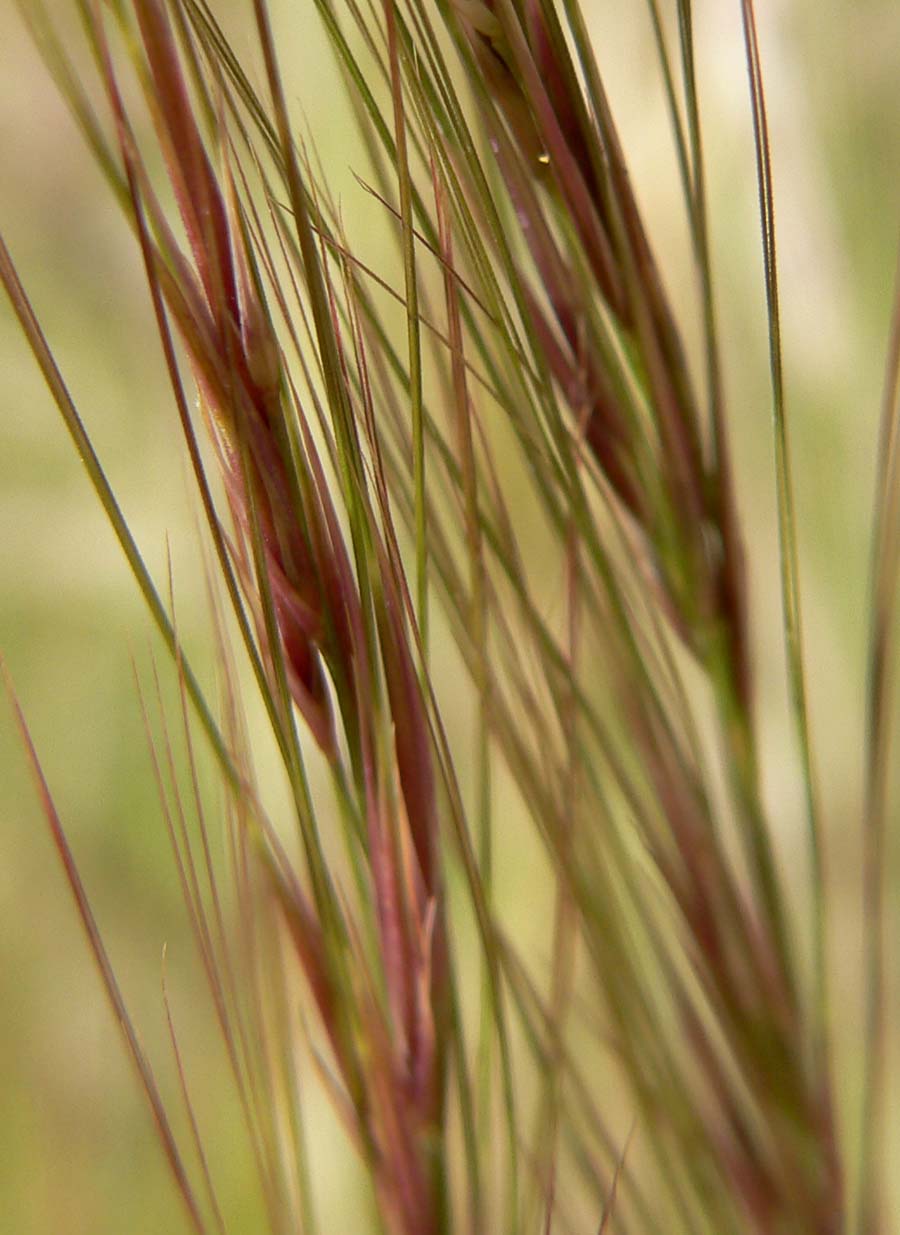
Purple Three-awn at a glance
- Water use
- Very Low (established)
- Sun
- Full sun.
- Mature size
- 1-2 ft H x 1-1.5 ft W (flowering stalks to 2-3 ft)
- Growth rate
- Fast; short-lived perennial (often acts as a pioneer/reseeding species) that establishes quickly.
- Bloom
- Showy purplish to reddish awns and seed heads that catch light beautifully, fading to tan., Spring and again with summer/fall monsoon rains (can flower multiple times Mar-Oct).
- Cold hardiness
- Cold hardy to about -10 to -20 F; roughly USDA zones 5-10. Hardy in Tucson.
- Soil
- Very adaptable; thrives in dry, sandy, gravelly, rocky, or poor soils with good drainage. Tolerates infertile and disturbed ground.
- Native range
- Native throughout the western U.S. and Mexico, including Arizona and the Sonoran Desert; very common on disturbed and well-drained desert sites.
- Best used as
- Naturalistic and revegetation plantings, Erosion control on slopes and disturbed sites, Backlit ornamental accent for its glowing seed heads, Low-water meadow plantings
- Wildlife
- Provides cover and nesting material for birds and small wildlife; seeds eaten by birds. Sharp three-pronged awns can cling to fur and clothing.
- Toxicity
- Not chemically toxic, but the sharp awns (florets) can injure the mouths, eyes, and skin of grazing animals and pets; considered low forage value when mature.
How to grow Purple Three-awn in Tucson & the low desert
Watering
Extremely drought tolerant; survives on rainfall once established. Occasional deep watering (monthly or less in summer) improves appearance. Overwatering shortens its life and causes flopping.
Fertilizer & nutrients
None needed; this grass thrives in poor soils and fertilizer is unnecessary and can encourage weak, floppy growth.
Pruning & care
Shear back to several inches in late winter to refresh; tolerates cutting well. Reseeds readily, so deadhead if volunteer seedlings are unwanted.
Notes
Prized ornamentally for its purple, airy seed heads, especially when backlit. Reseeds aggressively and can become weedy in irrigated areas, so site it where self-sowing is acceptable. Short-lived but easily renewed from seed.
Sources: University of Arizona Cooperative Extension; AMWUA Landscape Plants for the Arizona Desert; Arizona-Sonora Desert Museum; USDA NRCS Plants Database