
Grass · Sonoran native
Blue grama
Bouteloua gracilis · Poaceae
Also called: Blue grama grass, Mosquito grass, Eyelash grass, Blonde Ambition (cultivar)
Blue grama (Bouteloua gracilis) is a very low-water grass native to the Sonoran Desert region well suited to Tucson and the low desert. It thrives in full sun.
Blue grama at a glance
- Water use
- Very Low (established)
- Sun
- Full sun
- Mature size
- 12-18 in H foliage x 12-18 in W (to 2-3 ft H in bloom; turf use lower)
- Growth rate
- Moderate; warm-season grower
- Bloom
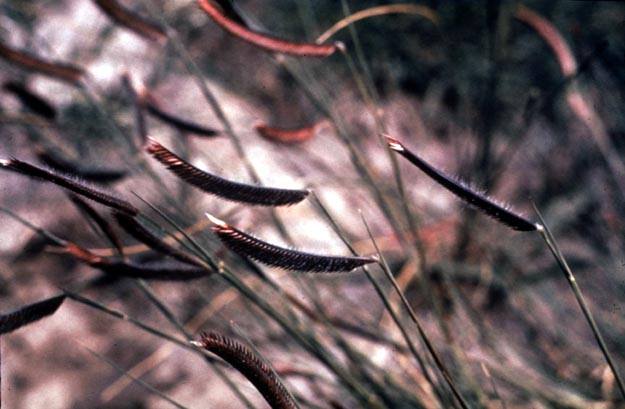
- Tan to purplish-brown, distinctive horizontal comb/eyebrow-shaped seed heads held at right angles to the stem, Summer into fall (June-Sept)
- Cold hardiness
- Very cold hardy, to about -30 to -40 F; USDA zones 3-10
- Soil
- Well-drained soils of many types - sandy, loamy, clay, rocky, alkaline. Very tolerant of poor, lean desert soils; dislikes soggy conditions.
- Native range
- Native across the western and central U.S. and northern Mexico, including Arizona; occurs in desert grasslands and plains. Native to Arizona / the broader Sonoran Desert grassland region.
- Best used as
- Native low-water lawn and meadow plantings, Ornamental accent (distinctive horizontal seed heads), Erosion control and revegetation, Naturalistic and wildlife gardens, Mass groundcover plantings
- Wildlife
- Important forage for wildlife and livestock; seeds eaten by birds and small mammals; provides cover and nesting habitat. Larval host for several skipper butterflies; valuable habitat grass.
- Toxicity
- Non-toxic; excellent, palatable forage and not poisonous to humans, pets, or livestock.
How to grow Blue grama in Tucson & the low desert
Watering
Highly drought tolerant once established. In Tucson, needs only occasional deep irrigation in summer (every 2-3 weeks or less); thrives on natural rainfall in many years. Overwatering reduces vigor. Warm-season grass - goes straw-colored/dormant in winter cold.
Fertilizer & nutrients
Very low needs; little to no fertilizer in landscape settings. For turf or lawn use, a light spring/summer nitrogen application during active growth; otherwise none needed.
Pruning & care
As an ornamental bunchgrass, mow or shear once in late winter (Feb) to remove old growth before spring green-up. As a low-mow or unmowed native lawn/meadow, occasional mowing is optional.
Notes
Tough, fine-textured warm-season native bunchgrass famous for its flag-like, one-sided horizontal seed heads. Among the most drought- and cold-tolerant ornamental grasses, suitable for low-water native lawns, meadows, and accents. The cultivar 'Blonde Ambition' is a popular taller selection with prominent chartreuse-to-blond seed heads. Warm-season: dormant and tan in winter.
Sources: AMWUA Landscape Plants for the Arizona Desert; University of Arizona Cooperative Extension; Arizona-Sonora Desert Museum; USDA NRCS Plant Guide; Tohono Chul references