
Grass · Sonoran native
Bull grass
Muhlenbergia emersleyi · Poaceae
Also called: Bullgrass, El Toro muhly (cultivar)
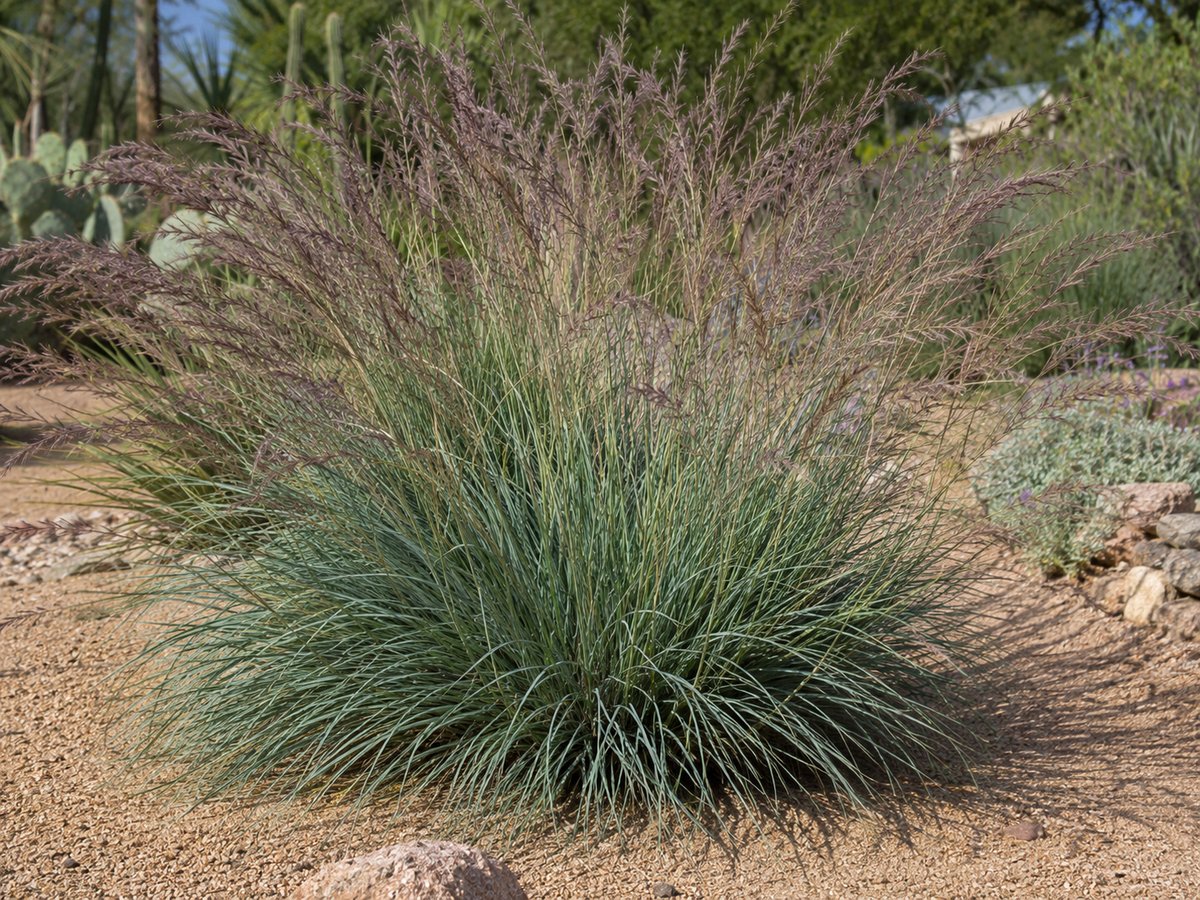
Bull grass (Muhlenbergia emersleyi) is a low-water grass native to the Sonoran Desert region well suited to Tucson and the low desert. It grows to 2-3 ft H x 2-3 ft W (flower spikes to 3-4 ft) in full sun to partial shade, with a moderate to fast growth rate.
Bull grass at a glance
- Water use
- Low (established)
- Sun
- Full sun to partial shade
- Mature size
- 2-3 ft H x 2-3 ft W (flower spikes to 3-4 ft)
- Growth rate
- Moderate to fast
- Bloom
- Purplish to pinkish-gray, airy panicles aging to tan, Late summer into fall (Aug-Oct)
- Cold hardiness
- Hardy to about 0 to -10 F; USDA zones 6/7-10
- Soil
- Well-drained, rocky or gravelly soils preferred; tolerates a range of native desert soils. Good drainage important.
- Native range
- Native to the southwestern U.S. (Arizona, New Mexico, Texas) and northern Mexico; in Arizona grows on rocky slopes and canyons of the desert mountains and grasslands. Native to the Sonoran Desert region (foothills/montane).
- Best used as
- Ornamental accent grass with attractive flowering plumes, Mass and naturalistic plantings, Borders and mixed beds, Erosion control on slopes, Native/wildlife and revegetation plantings
- Wildlife
- Provides cover and nesting material for birds; seeds eaten by birds and small mammals. Forage value for wildlife and livestock; habitat structure for insects.
- Toxicity
- Non-toxic; not known to be poisonous to humans, pets, or livestock.
How to grow Bull grass in Tucson & the low desert
Watering
Drought tolerant once established. In Tucson, water deeply every 7-14 days in summer for best appearance; tolerates low water. Reduce in winter.
Fertilizer & nutrients
Low needs; little to no fertilizer required in landscape soils. Optional light spring feeding for fuller growth.
Pruning & care
Cut back to a few inches in late winter (Feb) every 1-2 years to remove old foliage and spent plumes. Leave plumes for winter interest until cutback.
Notes
Glossy, deep green bunchgrass with broad basal leaves and showy, airy purplish-to-grayish flower plumes that catch light well. A handsome Sonoran-region native grass valued for both ornamental quality and toughness. The cultivar 'El Toro' is a vigorous, uniform selection often used in landscapes.
Sources: AMWUA Landscape Plants for the Arizona Desert; University of Arizona Cooperative Extension; Arizona-Sonora Desert Museum; Tohono Chul references