
Shrub
Indian Hawthorn
Rhaphiolepis indica · Rosaceae
Also called: India Hawthorn, Indian Hawthorne
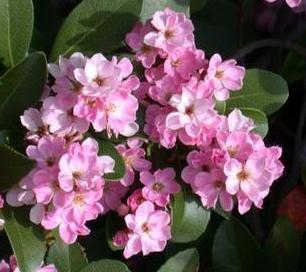
Indian Hawthorn (Rhaphiolepis indica) is a moderate-water shrub well suited to Tucson and the low desert. It thrives in full sun to partial shade, with a slow to moderate growth rate. Expect pink to white blooms Showy clusters of flowers in spring.
Indian Hawthorn at a glance
- Water use
- Moderate (established)
- Sun
- Full sun to partial shade; in Tucson does best with morning sun and afternoon shade. Full reflected western sun stresses the plant and worsens disease; too much shade reduces flowering and increases leaf-spot problems.
- Mature size
- Typically 3-5 ft tall and wide; some cultivars to 6 ft, dwarf forms ('Ballerina', 'Clara') 2-3 ft.
- Growth rate
- Slow to moderate
- Bloom
- Pink to white, Showy clusters of flowers in spring (March-April), sometimes a light rebloom; followed by bluish-black berry-like fruit.
- Cold hardiness
- Hardy to about 10-15°F; reliably evergreen in Tucson 9a/9b, occasional tip damage in hard freezes but generally no frost protection needed.
- Soil
- Prefers well-drained soil; tolerates Tucson's alkaline soils but appreciates organic amendment and mulch. Poor drainage promotes root rot.
- Native range
- Southern China and southeast Asia
- Best used as
- Low informal hedge, Foundation/mass planting, Accent shrub, Container, Borders along walks and patios
- Wildlife
- Spring flowers attract bees and other pollinators; berries provide some food for birds.
- Toxicity
- Generally considered low-toxicity / non-toxic; not on major pet-poison lists. As with all Rosaceae, seeds contain trace cyanogenic compounds, so discourage fruit ingestion, but no significant hazard to pets or children.
How to grow Indian Hawthorn in Tucson & the low desert
Watering
Irrigate deeply and regularly; about every 5-7 days in peak summer and every 2-3 weeks in winter once established. Water at the base, not overhead, to reduce fungal leaf spot. Moderate, consistent moisture is needed — it is not a low-water desert plant.
Fertilizer & nutrients
Feed with a balanced or slow-release shrub fertilizer in early spring after bloom; avoid heavy nitrogen, which promotes soft growth prone to leaf spot. Treat alkaline-soil iron chlorosis with chelated iron.
Pruning & care
Prune lightly just after spring bloom to shape; it naturally forms a tidy mound and is best left informal rather than sheared. Remove any leaf-spot-affected foliage and improve air circulation.
Notes
Entomosporium leaf spot is the major problem in humid conditions and overhead-watered settings; choose disease-resistant cultivars, water at the base, and give good air movement. A popular low-desert mounding shrub for partly shaded, regularly irrigated landscapes. Botanical name sometimes written Raphiolepis indica.
Sources: University of Arizona Cooperative Extension / Pima County Master Gardeners; AMWUA Landscape Plants for the Arizona Desert; Reputable Southwest horticulture references