
Shrub
Southern highbush blueberry
Vaccinium corymbosum 'Sunshine Blue' · Ericaceae
Also called: Sunshine Blue blueberry, container blueberry
Southern highbush blueberry (Vaccinium corymbosum 'Sunshine Blue') is a high-water shrub well suited to Tucson and the low desert. It grows to Compact, about 3-4 ft tall and wide in full sun to part sun, with a moderate growth rate.
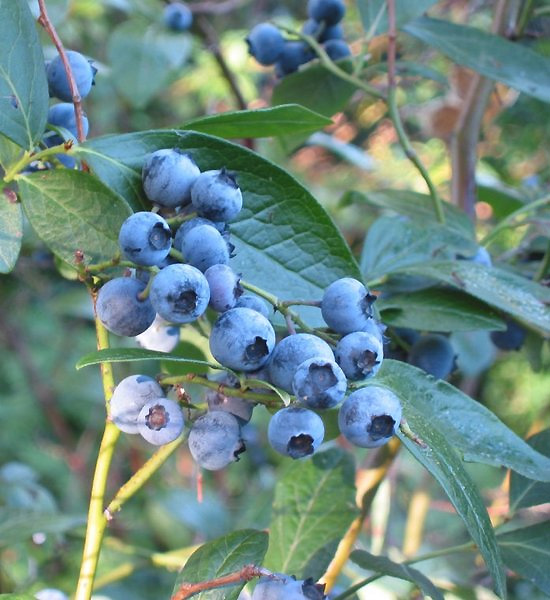
Southern highbush blueberry at a glance
- Water use
- High (established)
- Sun
- Full sun to part sun; in Tucson give morning sun with afternoon shade (filtered/30% shade cloth) to avoid summer leaf scorch.
- Mature size
- Compact, about 3-4 ft tall and wide
- Growth rate
- Moderate
- Bloom
- Pink-tinged white bell flowers; semi-evergreen blue-green foliage, Blooms late winter to spring (Feb-April in Tucson); berries ripen late spring into summer. Low chill requirement (~150 hrs) suits the low desert.
- Cold hardiness
- Cold hardy to about 10-20°F; flowers can be nipped by late frost. Heat and alkalinity, not cold, are the main Tucson challenges.
- Soil
- Acidic (pH 4.5-5.5), well-drained, high-organic peat/pine-bark mix; native Tucson soil is far too alkaline, so grow in containers or raised beds filled with an acid mix.
- Native range
- V. corymbosum is native to eastern North America; 'Sunshine Blue' is a low-chill southern highbush hybrid cultivar
- Best used as
- Edible fruit, Container / patio plant, Ornamental compact shrub
- Wildlife
- Flowers attract bees; ripe berries attract birds (use netting).
- Toxicity
- Non-toxic to humans, dogs, and cats; berries edible.
How to grow Southern highbush blueberry in Tucson & the low desert
Watering
Requires consistently moist, never-dry, acidic root zone; water frequently (often daily in summer container culture) with low-mineral water. Tucson tap water is alkaline and high in salts, so rainwater or acidified water is strongly preferred to avoid salt buildup and chlorosis.
Fertilizer & nutrients
Use an acid-loving (azalea/camellia) fertilizer with ammonium-form nitrogen; avoid nitrate fertilizers. Apply soil sulfur or chelated iron regularly to hold pH at 4.5-5.5 and prevent the iron chlorosis that plagues blueberries in alkaline desert soil.
Pruning & care
Minimal early on; after a few years remove the oldest, weakest, and twiggy canes in winter dormancy to renew the bush and improve fruit size. 'Sunshine Blue' stays compact and self-fertile.
Notes
In Tucson this is best grown as a container or raised-bed specimen in an acidic potting mix, not in native ground. Self-fertile and low-chill, so a single plant fruits. Manage water salts and soil pH diligently; use mulch and afternoon shade. High-maintenance, high-water relative to desert-adapted plants.
Sources: University of Arizona Cooperative Extension low-desert fruit/container guidance; Arizona Master Gardener Manual; Ericaceae/blueberry culture references for alkaline-soil regions